Latest News

Showing posts with label 5G. Show all posts

Sunday, September 27, 2020

Technologies to transform business operations during the pandemic (Part 1)

The pandemic is pushing organizations to drive innovations in their existing operations in response to the impact of COVID-19.


Drive to automation


The adoption of robots in factories and warehouse has long been a norm in the industry, only now do the organizations realize the crucial role of automation in transforming their operation during COVID-19. However, the need for social distance and safe workspaces has contributed to a major rise in the market for robotic systems and helpers. Firms like Brain Corp, Xenex and Simbe Robotics are hiring extra personnel to create and manage robotic stores and hospitals that now need to sanitize buildings and supermarket shelves.


As these systems help keep employees distant from each other, they also produce data that is used to streamline workflows and business planning. For instants, Simbe's Tally robots gather real-time data on where items are stored on shelves, helping consumers find what they're searching for less amount of time. Not only do these robotic solutions help boost customer experience, but they also keep on collecting new data, minimize operational costs.


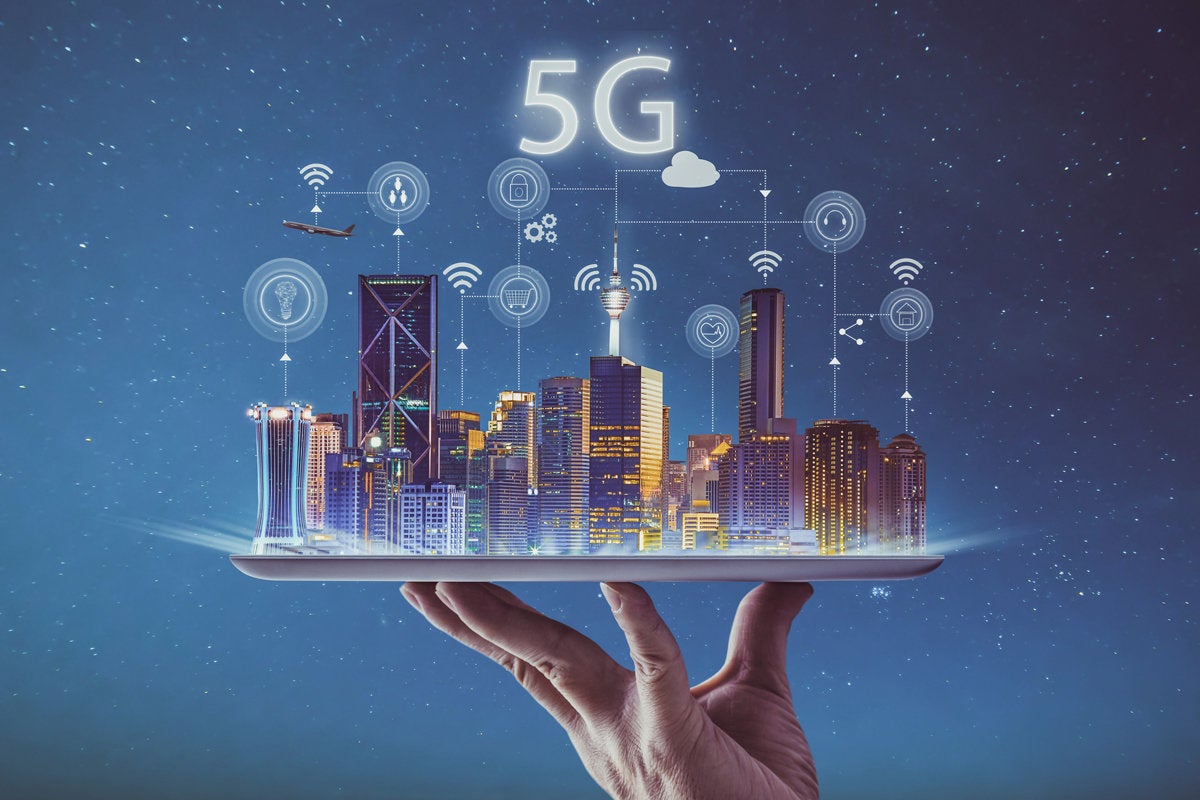
Technologies to transform business operations (Photo: Raconteur)


5G and the IoT


The emerging preference towards remote work is expected to accelerate the introduction of 5G networks and facilities as soon as immediate restrictions on travel are removed. The importance of high speed and low latency connectivity has been evident to home staff who are dealing with their difficulties in video conferencing and remote communication. 2.6 billion 5G subscriptions by 2025 and up from 13 million at the end of 2019 are expected, according to Ericsson.  This will encourage businesses to deliver more immersive consumer service across VR and AR in terms of creativity and product growth. Across B2B and B2C verticals, the data created by these value-added technologies can expand consumer interactions as user desires and actions are recorded in real-time and returned to optimized offerings.


IoT initiatives such as remote data collection on environmental conditions in buildings and communities are becoming increasingly crucial as policymakers and decision-makers pursue information on the activity and actions of people under lockdown.


Source: CIO ASEAN


About us: TMA Solutions was established in 1997 to provide quality software outsourcing services to leading companies worldwide. We are one of the largest software outsourcing companies in Vietnam with 2,500 engineers.

Sunday, September 6, 2020

5G Will Accelerate The Digital Transformation of Healthcare During The Pandemic

5G technology has already been in trial in many countries to combat COVID-19, especially in the healthcare sector. 


The pandemic is having tremendous impacts on every aspect of our daily life including healthcare. The epidemic, thus, has been the push for the digital transformation of the medical and pharmaceutical sectors. Telemedicine seems to be the new normal of the medical checkup and diagnosis since people try their best to avoid any in-person meeting with the doctors.


Cristiano Amon, Qualcomm President, stressed the crucial role of mobility in the field, bringing potentially great benefits for patients who are inconvenienced to access healthcare services during the pandemic. Added to that, 5G could accelerate the effort to transform the healthcare system online with the availability of existing technologies. By adopting 5G, the regular checkups and doctor visits could be made easy and efficient remotely.


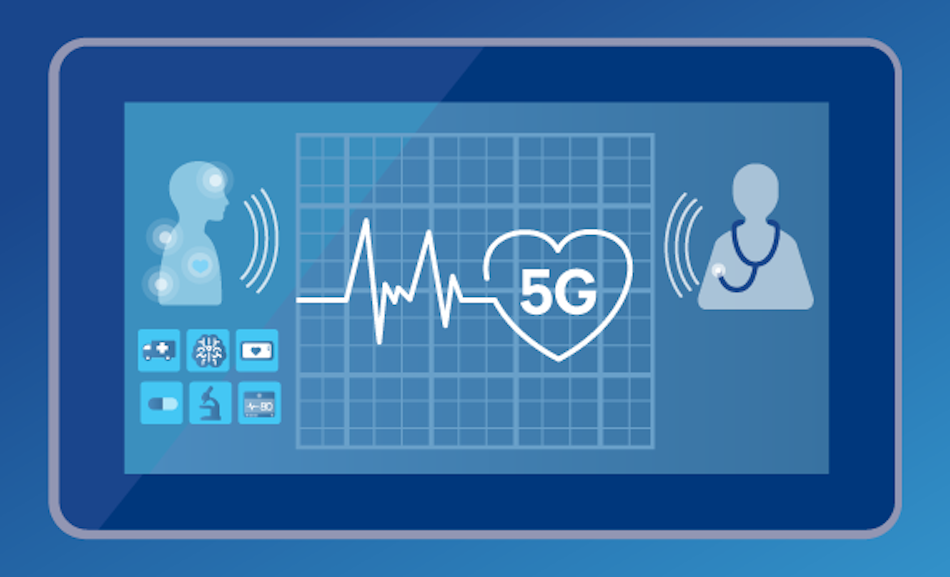
5G will accelerate the digital transformation of healthcare during the pandemic. (Photo: Doctor in Progress)


Although telehealthcare has been adopted by hospitals in some ways before, it is the COVID-19 that encourages transforming healthcare online. The drive for telehealth along with 5G technology could create solutions to combat COVID-19, providing care for patients at risk of virus contraction. Speed, coverage and responsiveness are three aspects that 5G is predicted to boost in wireless networks. The advancement in mobile network technology such as 5G is essential in sharing information about medical documents, especially sophisticated imaging and real-time reports. The low latency of the new technology is said to be the greatest advantage that will smoothen and speed up the transfer of data.


Source: CNET


About us: TMA Solutions was established in 1997 to provide quality software outsourcing services to leading companies worldwide. We are one of the largest software outsourcing companies in Vietnam with 2,500 engineers.

Visit us at https://www.tmasolutions.com/


Wednesday, July 22, 2020

Vietnam to commercialize 5G in October

According to the Ministry of Information and Communications (MIC), Vietnam has made official plans to commercialize 5G Network in October using only domestically produced components.

On January 17, the first video call using a 5G connection on a gNobeB transceiver was successfully implemented, this means that Viet Nam has officially mastered 5G network technology.

Vietnam is among the few countries that have the capability to produce 5G equipment. The MIC is making arrangements to direct investment in research and production of 5G equipment this year. Together with that, Vietnam is also building a roadmap to remove 2G technology from 2022 to aid the establishment of 5G technology.

The ministry said telecom infrastructure has seen an important change in frequency infrastructure. Implementing 5G in Viet Nam has advantages as Vietnamese electronics and telecommunications businesses have produced lots of equipment and infrastructure, whereas before foreign manufacturers were relied upon.

This would be an important step for socio-economic development and ensuring national defense, he added. 

Vietnam eyes commercial 5G launch this year - VnExpress International

Source: Shutterstock/SunnyVMD

According to the ministry’s Department of Information and Technology, the development of the 5G network has been one of the key orientations to upgrade digital infrastructure, serving national digital transformation. 

Deputy Minister Phan Tam said the Government has launched the 'Make in Viet Nam' strategy to help the country escape the middle-income trap. The country aims to produce chipsets for 5G networks and the internet of things (IoT) equipment. Government officials have offered preferential policies for the production as it is a high-tech area.

Source: Ministry of Information and Communications


About us: TMA Solutions was established in 1997 to provide quality software outsourcing services to leading companies worldwide. We are one of the largest software outsourcing companies in Vietnam with 2,500 engineers.

Visit us at https://www.tmasolutions.com/


Tuesday, June 2, 2020

Vietnam 5G deployment to be boosted by state support: experts

The earliest 5G services are set to be commercialized in mid-2020 following trials conducted through 2019

Hanoi — Vietnam’s 5G network is forecast to have a bright future with Government and regulator support while domestic manufacturing of 5G handsets could lower device costs and lend tailwinds to adoption.
According to analysts from Fitch Solutions, 5G appears to be high on the Government’s priority list, with the earliest services set to be commercialized in mid-2020 following trials conducted through 2019.
“We believe the impact will be greatest in the enterprise segment, particularly in Vietnam’s rapidly growing manufacturing sector, with Government initiatives supporting industry uptake. At the consumer level, we expect early launches to centre on larger, higher-income cities, with operators likely to focus on both mobile and fixed-wireless services,” the analysts said.
While fibre-based broadband connections in Vietnam have grown significantly in recent quarters, Fitch believed that fixed-wireless 5G could still serve as a complement to existing fixed services and support the development and adoption of higher bandwidth services, such as virtual reality (VR) video streaming and cloud gaming applications.
The analysts said while these short term moves could put investments into 5G networks on the backburner, the Government could pressure the State-owned operators to focus on 5G deployment. Licences and spectrum are yet to be allocated, although the Ministry of Information and Communications (MIC) could convert 5G trial licences, allocated in 2019, into commercial licences.
Through Resolution 52, introduced in September 2019, the Government aims to actively involve itself in the wider adoption of Industry 4.0 technologies to drive the country’s economic growth.
“We expect the government to lend support to the wider 5G ecosystem through the creation of test beds, or through enterprise grants to adopt 5G technologies,” Fitch said.
The MIC is already looking at licensing certain frequencies to domestic manufacturers of 5G products, and has stated that it will support the development of 5G-capable chips, although further details have not been disclosed.
According to Fitch analysts, the wider availability of low-cost 5G devices in Vietnam will support uptake, primarily among cost-conscious consumers.
“In terms of industry applications, we expect to see strong use of 5G in the manufacturing sector. Adoption of 5G-enabled sensors across the production line is a certainty, although this will centre most largely on the use of private networks in the short run, such as those developed by private players. Operators have made no indication of their 5G plans for the enterprise and industrial sectors, although we expect them to look at developing 5G networks in key economic zones and industrial areas,” the analysts said. — VNS


Source: Vietnam News 
About TMA: TMA Solutions was established in 1997 to provide quality software outsourcing services to leading companies worldwide. We are one of the largest software outsourcing companies in Vietnam with 2,500 engineers.

Wednesday, May 20, 2020

IoT network covered fully Ho Chi Minh City – Vietnam


All of HCM City’s 24 districts had Internet of Things (IoT) broadcasting stations installed in September 2019, made the city the first place in Viet Nam to be fully covered with an IoT network.


IoT is a system of interrelated computing devices and machines with the ability to transfer data over a network without requiring human-to-human or human-to-computer interaction.
Connected devices, smart devices and others are embedded with electronic components, software, and sensors with computer network connection capability, making it possible for them to collect and transmit data.

According to domestic newspapers, a military telecom giant group in Vietnam is set to announce the completion of IoT and 5G infrastructure helping HCM City become a smart city.

Around 1,000 Narrow Band – Internet of Things (NB-IoT) broadcasting stations have been activated, covering the whole city, the media reported.

NB-IoT technology is capable of disconnecting a device when it is inactive. Thus, the contact time of the terminal is extended to five years without the need for changing the battery.

The group is also accelerating the process of developing a platform using NB-IoT technology-related services for its customers.

It will perform services like smart parking, air quality monitoring, location tracking, and metering devices.

IoT boom

With IoT technology developing strongly, other provinces and cities in the country will also have full NB-IoT coverage soon.

The group was quoted on Thoi Bao Kinh Te Viet Nam (Vietnam Economic Times) as saying that after HCM City it would cover Ha Noi. Nearly 500 NB-IoT broadcasting stations have been installed and activated in Cau Giay District and some suburban districts.

A deputy general director of the group, said the company planned to take IoTtechnology to every province and city in the country.

Talking about IoT trends, telecom experts say with industry 4.0, the concept of customers has been expanded from just people to things.

The number of customers would thus run into the billions and the demand for connecting is huge, they said.

There are various estimates, with one saying that by 2020, globally, around 20 billion devices will be fitted with sensors and controllers via NB-IoT technology, accounting for 74 per cent of all devices.

By 2025 about 40 billion smart devices will be used in the world with a total of around 100 billion connections in sectors like transportation, manufacturing, healthcare, agriculture, and finance.
   
In a press release on Thursday, the military-owned telecom giant said it had set up 5G base stations in Ward 12 in the city’s District 10.

The trial is meant to be a comprehensive evaluation of the band, coverage and application of 5G before commercialization in 2020.

The official broadcast of 5G in HCM City is an important milestone in to make Viet Nam one of the first countries in the world to commercialize 5G services. With 5G, Viet Nam will go along with the world.


About TMA: TMA Solutions was established in 1997 to provide quality software outsourcing services to leading companies worldwide. We are one of the largest software outsourcing companies in Vietnam with 2,500 engineers


Thursday, May 14, 2020

The number of 5G subscriptions in Vietnam could hit 6.3 million by 2025


Vietnam 5G subscriptions predicted to top 6.3 million by 2025 or 6 percent of its total’s mobile subscriptions, a US technology conglomerate said.

The total number of 5G subscriptions in Southeast Asia is expected to reach 227 million by then, the U.S firm said at an event in Hanoi Thursday. The firm was citing figures from a report prepared by American global management consulting firm A.T. Kearney.

According to the report, Indonesia will take the lead in 5G subscriptions by 2025 with over 100 million subscribers, followed by Thailand, the Philippines, Malaysia, Myanmar, Vietnam, Singapore, Cambodia, Laos and Brunei.

By 2025, Vietnam will be placed sixth in Southeast Asia for the number of 5G subscriptions. 
Graphics by A.T. Kearney


A President of the US firm in Southeast Asia, said Vietnamese telecommunication firms could raise their revenue by up to $300 million each year starting 2025, thanks to the 5G service. However, the country would have to invest $1.5-2.5 billion in infrastructure in the 2020-2025 period for launching and operating the 5G service.
According to A.T. Kearney, 5G "is expected to be a step change from earlier generations."
With high throughput, ultra-low latency and low power connectivity, 5G promises speeds up to 50 times faster, 10 times more responsiveness, and much lower power connectivity than 4G, it said, adding that the time is right for developing 5G service as it arrives at a time when "consumers are using immense amounts of cellular data."
A General Director of the US firm in Vietnam, said: "Vietnam so far has been attractive for low-cost labor, especially in key sectors like manufacturing and processing. But this will no longer a strong point in the age of Industry 4.0 and Vietnamese firms should be aware of this and make good use of new technologies, including applying the 5G service."
In Vietnam, a telecom giant broadcast its first 5G network in September from its network of 5G base stations in the nation's economic hub Ho Chi Minh City.
The 10 stations will be used by the telecom corporation, to comprehensively check and assess its 5G service before launching it commercially next year.
The corpration installed the first 5G station in Hanoi early this year and made the first 5G phone call in May. It was the first firm in the country to receive permission to trial 5G services in January.
Last November, the Information and Communication Minister in Vietnam said at a conference that Vietnam should test 5G in 2019 and ensure nationwide coverage by 2020.
"Vietnam should be one of the first countries to launch the network, at least in Hanoi and HCMC," he said. The country had been one of the last in Southeast Asia to roll out 4G services.
5G is said to offer speeds 100 times faster than 4G, primarily used for smartphones and other similar devices. 5G is also expected to support new applications like remote medical procedures and autonomous driving.
About TMA: TMA Solutions was established in 1997 to provide quality software outsourcing services to leading companies worldwide. We are one of the largest software outsourcing companies in Vietnam with 2,500 engineers


Monday, April 27, 2020

Vietnam to launch commercial 5g services in June 2020


Viettel – Vietnam’s largest telecommunication company – will launch commercial 5G mobile services from June 2020.

According to the military-run company’s statement, they would use 5G network equipment and software developed itself. Besides, the company has become the sixth firm to produce 5G network equipment in the world.

Viettel said it would develop both civilian and military services based on its 5G platform.
The statement came after they conducted its first trial video call on its 5G network the same day.


About us: TMA Solutions was established in 1997 to provide quality software outsourcing services to leading companies worldwide. We are one of the largest software outsourcing companies in Vietnam with 2,600 engineers


Thursday, March 5, 2020

5G - A great leap forward from previous telecom generations

Telecom networks has undergone a long journey with much changes, and now human is about to witness its peak with its fifth generation – 5G.
Source: Lifewire
The first generation of telecom networks, which was introduced in 1980s, was still the analog standard. A decade after, 2G was developed, marking the beginning of digital cellular age. 3G then founded with much better speed compared to its ancestors (reached speeds from 200 kbps to several megabits per second). The development from 3G to 4G was considered technology’s huge breakthrough, as the latter enhance telecommunication speed to hundreds of megabits, even reach gigabits. Nevertheless, this has yet been a peak in telecom network development. Since founded, 5G was beyond comparison, as it excelled in all terms, from speed to capacity, compared to the previous generations.

5G, with its speed up to 100 gigabits per second can be a hundred times faster than the current 4G. This results in 5G solving many issues remained in 4G. For instance, 4G helps people in real-time communication, but in such field that needs absolute accuracy like medical, 4G application is likely to be risky, severely, lives-related risks. Hence, 5G with its faster data transmit and lower latency, disruption is an adequate solution for the existing problems. Distant surgery, which is considered impossible not long ago, thanks to 5G, now is having chances to be applied in reality. The fifth generation of telecom network has the ability to simultaneously connect a much larger number of devices, therefore enhancing IoT technology. Besides, the technology is likely to turn smartphone industry over a new leaf. 5G makes it possible to provide faster mobile browsing, calls as well as video calls in higher speed while still maintain their resolution quality.

We have seen a great leap forward from 4G to 5G. 5G is, undoubtedly, a breakthrough in the current stage of development. This, however, suggests the question that how people can make use of all of 5G potential. Without enough exploitation, investment as well as effort, people cannot ensure that whether 5G development is on the right track.


About us: 
TMA Solutions was established in 1997 to provide quality software outsourcing services to leading companies worldwide. We are one of the largest software outsourcing companies in Vietnam with 2,600 engineers. Our engineering team was selected from a large pool of Vietnam IT resources; they are well-trained and have successfully completed many large and complex projects. Please visit us: https://www.tmasolutions.com/

Friday, February 21, 2020

Applying 5G in Healthcare: Promises and challenges


5G brings huge opportunity to renovate the healthcare industry.
Source: Telit
The fifth generation of telecommunication holds promise to transform many world’s industries. Among them, healthcare is reported to experience the biggest changes. 5G development can change this industry at large, from improving existing devices to carrying out new services.

In detail, 5G betters imaging tools such as X-rays and MRIs, helping these devices operate wirelessly. Also, it can be a great helping hand in complex medical scenarios training by enabling augmented and virtual reality tools. However, the application of 5G in healthcare given the most attention right now is remote surgery.

Actually, remote surgery is not a completely new definition. The term has long been introduced, nonetheless, is considered to be impossible as even a small error in data transmission or little lagging in connection can cause risks related to lives. Now, with the development of 5G, which provides connection 10 to 100 times faster than a typical 4G connection, remote surgery has potential to be applied into reality.

With remote surgery, patients from rural and resource-limited areas are given chances to access to modern and high-quality healthcare services. 5G helps eliminate the distance, hence minimize the travel fee and provide emergent services at any times. Also, it would become an effective assistance to the government in tackling urbanization, as people from remoted areas can receive high-quality treatment despite living far away from the hospitals. In other words, thanks to 5G, geographical barriers will be removed, giving people equal opportunities to be treated by experts wherever they reside.

5G holds bright future for healthcare, but challenges as well as questions remain. In order to put remote surgery into reality, it demands 5G coverage to be available in both places where the surgeon and the patient is. The challenges include all hospitals being armed with 5G technology and upgraded devices to make sure that every information in remote surgery could be transmitted in real-time. The above mentioned questions, of course, cannot be solved in just 1 or 2 days. They demand both time and effort from not only the government, but also healthcare experts and 5G engineers in their relative fields.

In short, the arrival of 5G is expected to renovate the whole healthcare industry by improving speed while reducing latency. It brings remote surgery, considered unthinkable before, closer to the reality. Even though many issues remain to be solved, 5G shows promise for a modern, innovative healthcare industry in the future.

About us: 
TMA Solutions was established in 1997 to provide quality software outsourcing services to leading companies worldwide. We are one of the largest software outsourcing companies in Vietnam with 2,600 engineers. Our engineering team was selected from a large pool of Vietnam IT resources; they are well-trained and have successfully completed many large and complex projects. Please visit us: https://www.tmasolutions.com/

Wednesday, July 24, 2019

6 hard truths coming from 5G that we are going to face

Image result for 5g

Embrace it or disdain it, the 5G data revolution is coming either way. 5G's ultrafast speeds will soon land on new phones, starting at the high end. But we've already learned what these first-generation 5G phones will be like, and they shed light on some of the challenges that everyone might face in these early days of 5G. We've tested 5G speeds in multiple cities around the world, from Los Angeles to Seoul. We've been wowed. We've been frustrated. But each time, we learn something new about the 5G experience.

5G phones are in very few pockets today, but this next-generation wireless technology is widely accepted as the most significant advancement to come to phones in a decade. The new technology is characterized by ultrafast speeds that can download movies in seconds and enable huge chunks of data to transfer between the phone and the network with limited lag.

But 5G has also been the subject of intense focus by countries whose governments see the race to 5G as a proxy for their political and economic strength -- just look at how 5G is embroiled in the trade war between the US and China.

Here are our biggest takeaways about 5G data so far, based on the testing we've done over the last few months.

1. Consistency is more satisfying than speed

For some future uses of 5G, pushing down a lot of data really quickly will let you do cool, resource-intensive things on the fly, like play smooth, real-time games with high-res graphics and participate in lag-free video chats while walking down the street.

Carriers with faster 5G speeds theoretically have the advantage over those that don't in how quickly they can get you the data you need. And yet, the high-frequency spectrum that makes those skyrocketing speeds possible for 5G, called millimeter wave (mmWave), isn't good at traveling long distances, or getting through glass or walls the way that 4G can. That makes coverage limited.

Bouncing between 5G and 4G speeds has been frustrating in our real-world tests when, in one location, your entire Netflix series could download in 3 minutes, and in another, it takes over 10 minutes.

We had a better overall experience using Sprint because its 5G network covers a larger area, which kept the data flowing more predictably. Sprint uses a different layer of the spectrum, called sub-6Ghz, or sub-6. Those longer wavelengths don't bring quite as much speed, but they do travel farther, even through building and car windows.

The fastest-possible downloads are exhilarating, but in these early days, the rush doesn't last.

2. Gap between have and have-nots will widen

That rush you get when you download a whole season of a TV series in mere seconds isn't just exhilarating, it's addicting. The baseline changes. Even in my early tests, I caught myself feeling disappointed if I "only" recorded 400 megabits per second on the Speedtest.net app and not a gig.

With carriers, phone-makers and even presidents feeding the 5G hype machine, it's easy to see how a bias for ultrafast speeds could develop among everyday people. It's easy to see how people who don't live in the right metropolitan areas, or who live in rural surroundings, will trail behind in 5G adoption.

Some countries -- like the US, UK, Australia, South Korea, and Switzerland -- are ahead of the curve with 5G, while other world powers -- China, Japan, Russia, for example -- aim for a 2020 rollout.

As with the switchover from 3G to 4G, staggered adoption is to be expected. But when the gulf between 4G and 5G speeds -- and what you can do with them -- is so large, it's quite possible for that gap to widen even more.

We found two notable exceptions to this emerging sensibility. One is that 4G networks will get faster alongside 5G growth. The other is that in countries with exceptionally fast 4G service, like Australia, we won't see dramatic differences in real-world activities over 5G and 4G -- at least not at first.

3. 5G phones are expensive 

Phone prices are already spiking year over year, far outstripping the cost of inflation. 5G raises those costs.

5G phones have to have a compatible chip to connect to 5G networks, which means mobile chipmakers can charge more. So far, most 5G phones we've used so far have been premium devices, which means you're also tacking on extra for fancier cameras and other specs.

4. But we don't want to pay more for 5G

The cost of the phone doesn't even consider the cost of service. Carriers have spent billions of dollars building out 5G networks. In the US, at least, the plan is to recoup some of that expense by charging you more per month to use 5G data (perhaps a lot more of it, too).

But we don't think today's spotty 5G service is worth paying more for, not right now. Verizon has temporarily waived its $10 per month 5G surcharge. In Europe, the trend is to bundle extra services into your unlimited data plan -- without charging exorbitant fees. Vodafone will charge for unlimited 5G based on the speed bracket you want. For example, you'll pay less if you don't mind slower 5G speeds, and more if you want to stream video.

We think European carriers are on the right track. More people will upgrade from 4G to 5G if they sweeten the deal, not if they sour it with charge upon charge.

Here's how to pick the best 5G network when the time is right.

5. You may also pay a price with battery life

You could pay more than just cash for 5G speeds. CNET's global testers noticed that using 5G on phones seemed to tap their battery reserves faster than 4G networks.

After at least four hours apiece of relentless 5G testing, the batteries on our test phones drained significantly. In the case of some phones, four hours of testing completely zapped the Mod attachment, which cut off 5G capability.

6. The weather could get in your way

Scientists worry that 5G radio signals could throw weather forecasting out of whack, but it's the weather itself that buyers should also consider.

Soaring July temperatures brought the point to bear during two of our tests. Some phones use the high-frequency mWave spectrum, which puts the devices at greater risk of overheating, especially when completing resource-heavy tasks like streaming video or creating advanced photography effects.


About us:

TMA Solutions was established in 1997 to provide quality software outsourcing services to leading companies worldwide. We are one of the largest software outsourcing companies in Vietnam with 2,400 engineers. Our engineering team was selected from a large pool of Vietnam IT resources; they are well-trained and have successfully completed many large and complex projects. Visit us at: https://www.tmasolutions.com/

Tags

Recent Post