Latest News

Showing posts with label Artificial Intelligence. Show all posts

Friday, October 9, 2020

Artificial Intelligence Translates Thoughts Into Text Using Brain Implant

 Researchers at the leading university had developed the AI to decipher up to 250 words in real-time from a set of between 30 and 50 sentences.

Mind-reading AI can turn the neural activity into sentences with a 97 percent accuracy rate. Scientists have developed an artificial intelligence system that can translate a person’s thoughts into text by analyzing their brain activity.  The algorithm was trained using the neural signals of four women with electrodes implanted in their brains, which were already in place to monitor epileptic seizures.

The volunteers repeatedly read sentences aloud while the researchers fed the brain data to the AI to unpick patterns that could be associated with individual words. The average word error rate across a repeated set was as low as 3 percent.

“A decade after the speech was first decoded from human brain signals, accuracy and speed remain far below that of natural speech,” states a paper detailing the research, published this week in the journal Nature Neuroscience.

“Taking a cue from recent advances in machine translation, we trained a recurrent neural network to encode each sentence-length sequence of neural activity into an abstract representation, and then to decode this representation, word by word, into an English sentence.”

AI now can translate thoughts into text using a brain implant. (Photo: Newscientist.com)

The average active vocabulary of an English speaker is estimated to be around 20,000 words, meaning the system is a long way off being able to understand regular speech. Researchers are unsure about how well it will scale up, as the decoder relies on learning the structure of a sentence and using it to improve its predictions. This means that each new word increases the number of possible sentences, therefore reducing the overall accuracy.

“Although we should like the decoder to learn and to exploit the regularities of the language, it remains to show how much data would be required to expand from our tiny languages to a more general form of English,” the paper states. One possibility could be to combine it with other brain-computer interface technologies that use different types of implants and algorithms.

Last year, a report by the Royal Society claimed that neural interfaces linking human brains to computers will enable mind reading between people. The report cited technologies currently being developed by Elon Musk’s Neuralink startup and Facebook, who describe cyborg telepathy as “the next great wave in human-oriented computing”.

The Royal Society estimated that such interfaces will be an “established option” for treating diseases like Alzheimer’s within two decades.

“People could become telepathic to some degree, able to converse not only without speaking but without words,” the report stated while expanding on more futuristic applications like being able to virtually taste and smell without physically experiencing the sensation.

Source: Independent UK


About us: TMA Solutions was established in 1997 to provide quality software outsourcing services to leading companies worldwide. We are one of the largest software outsourcing companies in Vietnam with 2,500 engineers.

Visit us at https://www.tmasolutions.com/

Wednesday, September 9, 2020

The brain-inspired computing system could decrease the carbon footprint of Artificial Intelligence

Extremely energy-efficient artificial intelligence is now closer to reality after a study by UCL researchers found a way to improve the accuracy of a brain-inspired computing system.

Brain-inspired electronic system (Photo: Sci Tech Daily)

The system creating artificial neural networks by memristors is said to be at least 1,000 times more energy-efficient than conventional transistor-based AI hardware. However, it still has been more prone to error until now.


Existing AI is extremely energy-intensive due to the fact that training one AI model can emerge 284 tonnes of carbon dioxide, equivalent to the lifetime emissions of five cars. Supplanting the semiconductors that make up all advanced gadgets with memristors, a novel electronic gadget previously underlying 2008, could decrease this to a small amount of a huge amount of carbon dioxide which is equal to emanations produced in an afternoon’s drive.


Since memristors are a lot more vitality effective than existing figuring frameworks, they can conceivably pack colossal measures of registering power into hand-held gadgets, eliminating the need to be associated with the Internet.


This is particularly significant as over-dependence on the Internet is relied upon to get dangerous in future due to ever-expanding information requests and the troubles of expanding information bandwidth past a specific point.


In the new investigation, distributed in Nature Correspondences, engineers at UCL found that exactness could be enormously improved by getting memristors to cooperate in a few sub-gatherings of neural systems and averaging their figurines, implying that imperfections in every one of the systems could be counteracted.


Memristors, portrayed as "resistors with memory," as they recollect the measure of electric charge that moved through them even subsequent to being killed, were viewed as progressive when they were first worked longer than 10 years back, a "missing connection" in hardware to enhance the resistor, capacitor and inductor. They have since been made economically in memory gadgets, however the examination group say they could be utilized to create man-made intelligence frameworks inside the following three years.


Memristors offer immensely improved effectiveness since they work not simply in a paired code of ones and zeros, however at numerous levels somewhere in the range of zero and one simultaneously, which means more data can be stuffed into each piece.


Besides, memristors are regularly portrayed as a neuromorphic (mind propelled) type of registering in light of the fact that, as in the cerebrum, handling and memory are executed in a similar versatile structure obstructs, rather than current PC frameworks that squander a great deal of vitality in information development.


In the investigation, Dr Adnan Mehonic, PhD understudy Dovydas Joksas (both UCL Electronic and Electrical Designing), and associates from the UK and the US tried the new methodology in a few distinct sorts of memristors and found that it improved the precision of every one of them, paying little mind to material or specific memristor innovation. It likewise worked for various issues that may influence memristors' exactness.


Specialists found that their methodology expanded the exactness of the neural systems for run of the mill man-made intelligence assignments to a tantamount level to programming devices run on traditional advanced equipment.


Dr Mehonic, head of the investigation, stated: "We trusted that there may be more conventional methodologies that improve not the gadget level, however the framework level conducts, and we accept we discovered one. Our methodology shows that, with regards to memristors, a few heads are superior to one. Orchestrating the neural system into a few littler systems as opposed to one major system prompted more noteworthy exactness in general."


Dovydas Joksas further clarified that they acquired a well known procedure from software engineering and applied it with regards to memristors. Furthermore, it worked! Utilizing starter reenactments, they found that even basic averaging could essentially build the precision of memristive neural systems.


Educator Tony Kenyon (UCL Electronic and Electrical Designing), a co-creator on the examination, included: "We accept right now is an ideal opportunity for memristors, on which we have been laboring for quite a while, to play a main part in a more vitality feasible time of IoT gadgets and edge figuring."


Source: Science Daily.


About us: TMA Solutions was established in 1997 to provide quality software outsourcing services to leading companies worldwide. We are one of the largest software outsourcing companies in Vietnam with 2,500 engineers.
Visit us at https://www.tmasolutions.com/

Monday, September 7, 2020

How to make AI trustworthy

One of the biggest bottlenecks when adopting new technologies is trust in AI. Now, a new tool generates automatic indicators if data and predictions generated by AI algorithms are trustworthy.


Neural networks are a type of artificial intelligence that is modeled after the brain and generate predictions. But how we can tell these predictions are trusted? One of the key barriers to the adoption of self-driving cars is that the vehicles need to act as independent decision-makers in the road. Can we trust the computer software within the vehicles to make sound decisions within fractions of a second - especially when conflicting information is coming from computer vision from cameras or data from lidar? Even humans can be indecisive in certain cases involving conflicting information.


Knowing which systems to trust and is most accurate would be helpful to determine what decisions 

the autopilot should make (Photo: aitrends)


A new tool developed by USC Viterbi Engineering researchers named DeepTrust can quantify the amount of uncertainty, should human intervention is necessary. It took the research team almost two years to employ what is known as subjective logic to assess the architecture of the neural networks. On one of their test cases, DeepTrust found that the prediction pointing towards Clinton winning in 2016  Presidential election had a greater margin for error.


The other significance of this research is that it provides insights on how to test the reliability of AI algorithms that are normally trained on thousands to millions of data points. In other way, how to make sure the architecture of these neural network systems has greater accuracy. This work could also serve as a guidepost as to how much "noise" can be in testing samples if computer scientists want to maximize accuracy and trust.


This model is the first of its kind. To our knowledge, there is no trust quantification model or tool for deep learning, artificial intelligence, and machine learning. DeepTrust has the potential to make AI aware and adaptive.


Source: ScienceDaily


About us: TMA Solutions was established in 1997 to provide quality software outsourcing services to leading companies worldwide. We are one of the largest software outsourcing companies in Vietnam with 2,500 engineers.

Visit us at https://www.tmasolutions.com/


Thursday, September 3, 2020

Combination Of AI & Blockchain - The Revolution Of Financial Industry (Part 2)

This part will cover the last three factors when combining Blockchain and Artificial Intelligence in the financial industry. 

    4. A Unique and Financial Trust system

In 2017, after the dramatic drop in Bitcoin's price value and the failure of so many ICO projects, lots of investors started losing trust in cryptocurrencies, which are backed by blockchain. Recently, there is a new blockchain-based solution named DYCO (Dynamic Coin Offerings) – a crowdfunding model designed to offer a guarantee of refunds and protection upon any investment made on any blockchain project, according to Entrepreneur.com. This model can help potential investors scrutinize project whitepapers and choose ICOs with the highest profit potential. Moreover, it helps eliminate any chances of losing your whole invested fund.


Blockchain is inherently perfect for storing highly confidential information because of its immutability features that can’t be altered.  And the application of Artificial intelligence, on the other hand, will help financial companies to boost their income, efficiency, provide detailed insight about data and manage risk as well. Therefore, by combining the unique features of both AI and blockchain, it’s logical to say that there will be a much promising trust system in the financial industry.


    5. Analyzing and Understanding AI Decisions

One of the factors that limit the mass adoption of artificial intelligence is its complexity in interpretation - AI can evaluate many variables unaided. That's the reason why many people won't implement it if they can’t clearly explain computers' decisions, especially when it comes to financial transactions that require thorough investigation.


However, there is existing proof that humans could tamper with the recorded data set for analysis, which is one of the main reasons people are still in doubt when it comes to processing financial transactions.


The combination of blockchain and AI help people disentangle the complexity by making computers to be more transparent. Blockchain is an underlying technology that is known for transparency and immutability. Blockchain can store every decision made by AI and still make them available for analysis, so people can be sure that any financial record or information from entry to examination/audit is tamper-proof.


    6. The challenges when applying Blockchain and AI

Blockchain is known as a decentralized technology capable of bringing solutions to centralized systems, e.g., banking. However, some people see it as a threat to the original will of decentralization when it's being merged with artificial intelligence/ machine learning. This is one of the possible challenges that developers are tirelessly working on solving.


Besides, AI requires access to a pool of data, and incorrect data can ruin both machine learning blockchain technology's integrity and effectiveness. While there are ways to resist erroneous data, it’s still an ongoing obstacle to solve.


Source: DZone


About us: TMA Solutions was established in 1997 to provide quality software outsourcing services to leading companies worldwide. We are one of the largest software outsourcing companies in Vietnam with 2,500 engineers.

Visit us at https://www.tmasolutions.com/

First microscopic robots are able to walk thanks to laser tech

A university collaboration has generated the first microscopic robots that incorporate semiconductor components. The users can control and make these special robots walk by using laser technology.

The first microscopic walking robot by applying standard electronic signals (Photo: The Week)


The first microscopic robots including semiconductor components have been made through a Cornell University collaboration which allows them to be controlled and made to walk with some standard electronic signals.


These robots provide a sample for building even more complicated versions that utilize silicon-based intelligence. Besides, they can be mass produced, and it is promised in the near future that they can travel through human tissue and blood.


The new robots are estimated to be about 5 microns thick (a micron is one-millionth of a meter), 40 microns wide and from 40 to 70 microns in length. There is a simple circuit made from silicon photovoltaics in each bot which essentially functions as the torso and brain. More than that, the four electrochemical actuators are set into them so as to function as legs.


The researchers control the robots by flashing laser pulses at different photovoltaics, each of which charges up a separate set of legs. By toggling the laser back and forth between the front and back photovoltaics, the robot walks.


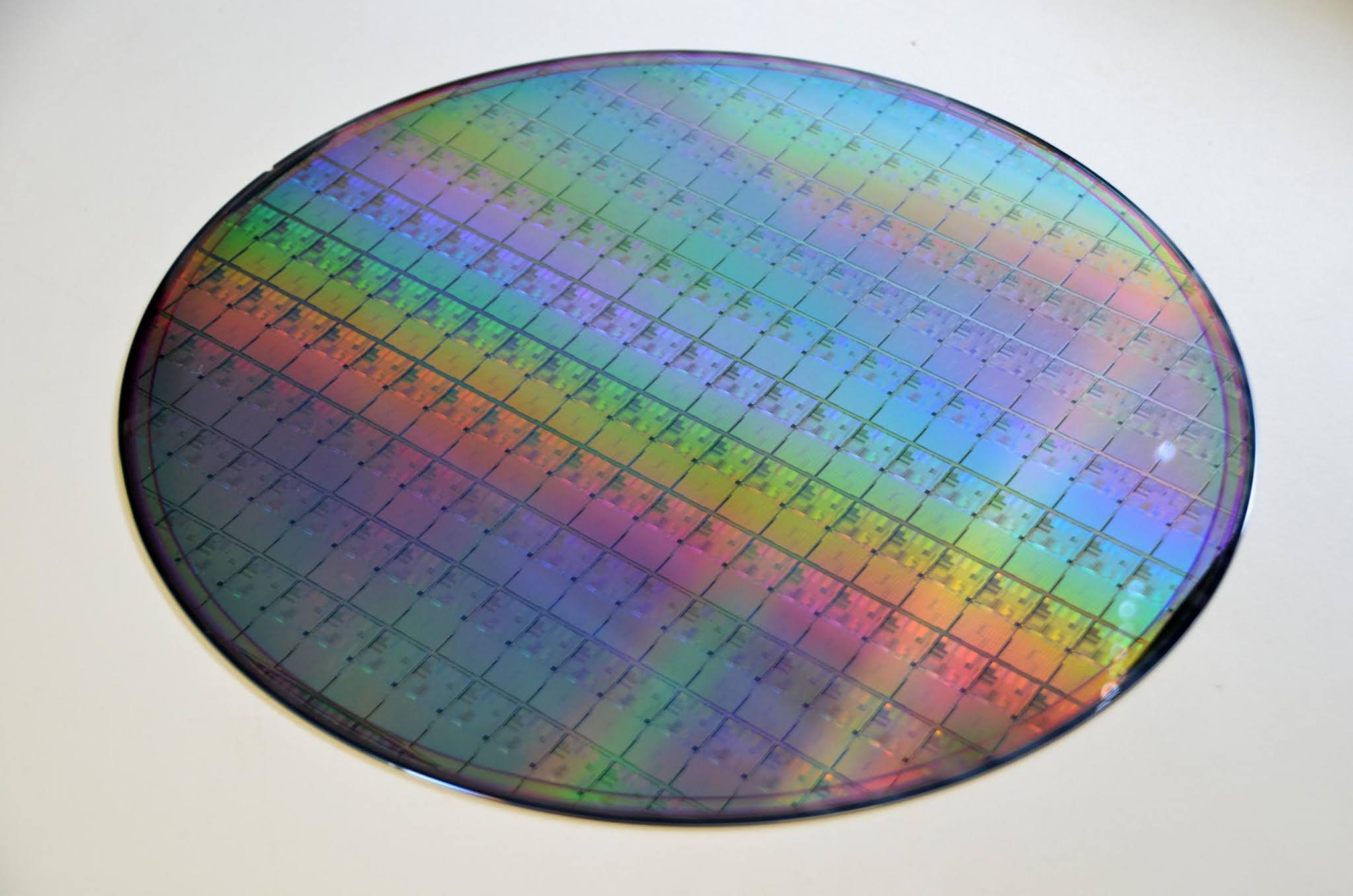
The robots are certainly high-tech, but they operate with low voltage (200 millivolts) and low power (10 nanowatts), and remain strong and robust for their size. Because they are made with standard lithographic processes, they can be fabricated in parallel: About 1 million bots fit on a 4-inch silicon wafer.


The researchers are discovering more ways to soup up the robots with more complex electronics and onboard computation. These improvements could one day result in swarms of microscopic robots crawling through and restructuring materials, or suturing blood vessels, or being assigned en masse to probe large swaths of the human brain.


Source: Science Daily


About us: TMA Solutions was established in 1997 to provide quality software outsourcing services to leading companies worldwide. We are one of the largest software outsourcing companies in Vietnam with 2,500 engineers.

Visit us at https://www.tmasolutions.com/

Machines can now learn unsupervised at 'lightspeed' after AI breakthrough, scientists say

According to research published in Applied Physics Reviews, the performance of photon-based TPU is 100 times higher than that of the electrical processor.

This new approach enhances not only the speed but also the efficiency of machine learning neural networks significantly. Current processors used for machine learning have certain limitations in performing complicated operations due to the power required to process the data. The more demanding the task, the more complex the data, therefore the greater the power requires. In addition, these networks are also limited by the slow transmission of electronic data between the processor and the memory.

Elite U.S. researchers discovered that using photons within the neural network (tensor) processing units (TPUs) could overcome these limitations and create more powerful and power-efficient AI. In addition, their photon-based TPU was able to perform between 2-3 orders of magnitude higher than an electric TPU.

By replacing electricity with light-based TPU, machines now can learn unsupervised at a speed of lightning. (Photo: Analytics Insight)

“We found that integrated photonic platforms that integrate efficient optical memory can obtain the same operations as a tensor processing unit, but they consume a fraction of the power and have higher throughput,” said one of the paper’s authors. “When opportunely trained, [the platforms] can be used for performing interference at the speed of light,” he added.

Potential commercial applications for the innovative processor include 5G and 6G networks, as well as data centers tasked with performing vast amounts of data processing. Photonic specialized processors can save a great deal amount of energy, improve response time, and reduce data center traffic to a significant amount.

Source: Independent UK

About us: TMA Solutions was established in 1997 to provide quality software outsourcing services to leading companies worldwide. We are one of the largest software outsourcing companies in Vietnam with 2,500 engineers.

Visit us at https://www.tmasolutions.com/


Tuesday, September 1, 2020

Assessing the performance of surgeons by scanning their brain

The researchers have researched and developed a deep learning AI tool called Brain-Net that can rely on surgeons' neuroimaging data to accurately predict their certification scores.

Objective assessments of surgeons' surgical skills are determined through certification scores, known as the Fundamentals of Laparoscopic Surgery program (FLS). The certification score demonstrated effective training is calculated manually using a formula that consumes effort and time. 

Researchers have applied nationally The Fundamental of Laparoscopic Surgery program for medical subjects including surgical residents, fellows, and practicing physicians with the aim of learning and practicing endoscopy, enabling them to measure and document those skills. Besides, the time of the surgical task execution, as well as error estimation, are the scoring platform, which is one of the crucial aspects of this program. 

AI can predict a surgeon’s certification scores based on their neuroimaging data. (Photo: News Punch)

Thanks to a simultaneous neural network from using optical imaging of the human brain, the team of researchers were able to accurately predict the FLS score of surgeons. They used functional near-infrared spectroscopy (fNIRS) data which is effective in categorizing different motor tasks, to predict the final performance score used in the surgical certification. These outcomes are a premise to improve surgical skill acquisition, retention, and the certification process by utilizing neuroimaging and deep learning for neurofeedback. While current approaches only concentrate on task repetition without the potential for fast and objective feedback, these new approaches can enable a more personalized training regimen with bedside responding for optimal skill acquisition.

The neuropsychiatry of surgeons is a way to improve the way their surgical skills are taught and evaluated, thus laying the foundation for new improvements in surgical mission performance and personalized training methods in the future. Moreover, researchers also hope future studies will be able to find a new arrangement of neuro biomarkers that give a better understanding of surgical skill learning and execution.

Source: Digitaltrends

About us: TMA Solutions was established in 1997 to provide quality software outsourcing services to leading companies worldwide. We are one of the largest software outsourcing companies in Vietnam with 2,500 engineers.

Visit us at https://www.tmasolutions.com/
 

Friday, August 28, 2020

Combination Of AI & Blockchain - The Revolution Of Financial Industry (Part 1)

The revolution in ICT has affected finance industry at an increasing rate for decades. The financial firms are trying to cope with these changes by adopting new kinds of technology to deal with the increasing demand and the huge increase in the competition worldwide in the financial sector.


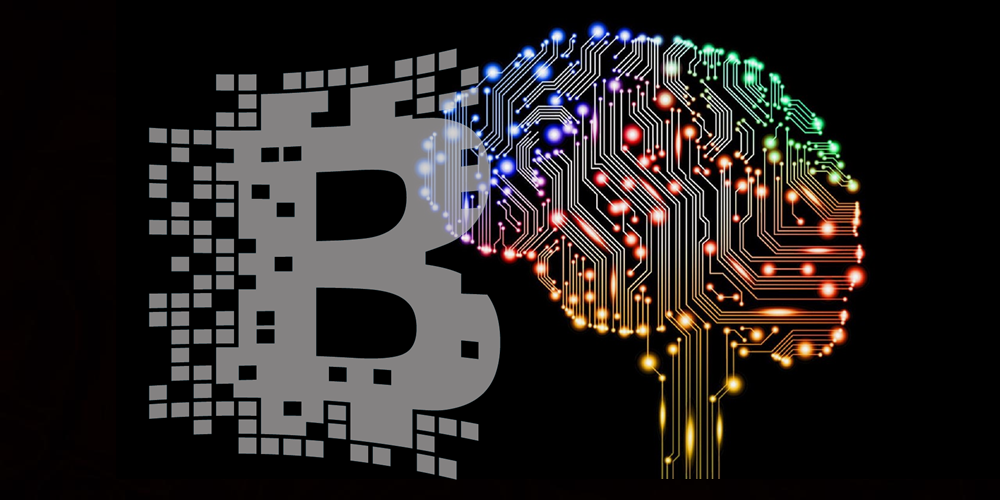
While so many industries are beginning to embrace the amazing options these technologies – Artificial Intelligence and Blockchain technology offer – helping them to create more value,  boosting sales, and so on,  it’s interesting to know that the combination of both will positively revolutionize the future of the fintech industry.


The convergence of Artificial Intelligence and Blockchain brings a better future for the Financial Industry.

With the superb benefits of Blockchain and AI, this combination will yield bewildering results and take an entirely new level across all industries especially with the financial sector. Here are amazing features and underlying capacities that come to play as below:

Blockchain — backbone of AI infrastructure | by Jura Protocol Media | Medium

1. A Secured Payment Network

One of the underlying benefits of blockchain technology is its unique ability to operate as a borderless payment network. Blockchain facilitates a frictionless payment with low prices and at a faster pace compared to the traditional methods. 


Unfortunately, there are still some existing security concerns affecting its widespread adoption. Theft is increasing and getting more sophisticated daily since it requires a set of public and private keys to run a blockchain business.


By leveraging the power of AI and ML, any improper activities on your blockchain account can be identified, thereby alerting the account owner about some human involvement. Moreover, AI can analyze the behavior and biometrics to help eliminate any security susceptibility in payment networks.

2. Controlled Automation for Financial Activities

There is no doubt that finance is moving towards automation. On the other hand, there are pending issues that could pose threats to the finance sector if ‘calculated restrictions’ aren’t placed on automated processes. Meanwhile, to run a smooth automation financial system, it must occur synchronically with built-in checks and balances. In this case, smart contracts facilitate automatic processes, while AI and ML can look for irregularities simultaneously. Therefore, merging blockchain-powered smart contracts with AI can help verify the smart contracts and predict its vulnerability that can be exploited by theft. The resulting infrastructure would facilitate a completely secure, transparent, and efficient financial transaction.


3. An Efficient Financial Service

About 57% of businesses said that cost-saving is the primary benefit of participating in a consortia blockchain network, according to the 2019 Deloitte’s Global Blockchain Survey. The main reason why financial companies implementing both AI and Blockchain solutions is to improve their service speed and service quality. The result of this combination will help businesses minimize costs, maximize profits while still providing excellent value to customers.

Source: DZone

About us: TMA Solutions was established in 1997 to provide quality software outsourcing services to leading companies worldwide. We are one of the largest software outsourcing companies in Vietnam with 2,500 engineers.

Visit us at https://www.tmasolutions.com/

Wednesday, August 26, 2020

Artificial Intelligence turns human thoughts into text applying brain implant

By analyzing human brain activity, an artificial intelligence system can translate a person’s thoughts into real words with an accuracy rate of 97%. From a set of between 30 and 50 sentences, AI is able to decipher up to 250 words in real-time.

The researchers set the algorithm utilizing the neural signals of four women with electrodes implanted in their brains, which were already in place to monitor epileptic seizures. While the people were constantly reading sentences aloud, the researchers provided the brain data to the AI to eliminate patterns that may be related to individual words. The average word error rate per repeating population is as low as 3%.

Speed ​​and accuracy, compared to natural speech, are tough standards for scientists to develop artificial intelligence systems that decode human brain signals. A trained repetitive neural network for the advancement of machine translation can encode each sentence-length sequence of nerve activity into an abstract representation and decode them into complete English sentences.

AI can translate neural activity into sentences with an accuracy rate of 97 percent (Photo: Getty Images)

However, the system is still deficient. In fact, the average working vocabulary of an English speaker is estimated to be around 20,000 words and this is what hinders normal verbal understanding of the system. Each new word increases the number of possible sentences while the AI system improves prediction based on learning the structure of a sentence. As a result, the scaling of the system is hampered and the overall accuracy also decreases.

In order to partially solve this problem, a possibility is presented to integrate the system with other brain-computer interface technologies using different types of algorithms and implants. In 2019, a report by the Royal Society claimed that the neural interfaces connecting computers to human brains would enable mind reading between humans. Besides, within two decades, diseases like Alzheimer's are able to be treated with the use of these interfaces, which will be an “established option”.

In the future, applications for linking the human brain to technology will be upgraded to a variety of ways such as humans can taste and smell with no sensory experience.

Source: Independent

About us: TMA Solutions was established in 1997 to provide quality software outsourcing services to leading companies worldwide. We are one of the largest software outsourcing companies in Vietnam with 2,500 engineers.

Visit us at https://www.tmasolutions.com/


Tuesday, August 18, 2020

Identifying students who need help with AI enhancements

An artificial intelligence (AI) model is created to more effectively predict how students are learning through educational games. The improved model called multi-task learning utilizing AI training concepts can be applied to boost the advantages of instructional and learning results.

Multi-task learning is an approach in which a model is required to perform various tasks. For example, the model is applied to predict students' ability to correctly answer test questions and the task of the model is based on the questions and the overall score of the test.

The AI model identified common behaviors of students

In this study, 181 students who are the subjects of the research are examined and data mining by AI through how students play games and answer Question 1 in the test. Common patterns of students in answering right or wrong to Question 1 will be the background for AI ​​to determine a new student's way of answering Question 1. This function is performed for every question at the same time with the same gameplay but the different questions.

The results obtained from the model application are completely different. Relied on typical AI training methods, the researchers noticed that the multi-task model was about 10 percent more accurate than other models. Specifically, the model can send a notification to the teacher if the student needs further instruction through student participation in the gameplay. The model can also aid in-game features such as plot changes to help students clarify struggle issues.

In psychology, each question posed has a different value. With deep learning and machine learning approaches to AI, the researchers have the ability to take an interdisciplinary approach that combines this aspect of psychology. This also provides the opportunity for more complicated modeling techniques to be incorporated into educational software, adapting to the requirements of students in learning.

Source: Science Daily

About us: TMA Solutions was established in 1997 to provide quality software outsourcing services to leading companies worldwide. We are one of the largest software outsourcing companies in Vietnam with 2,500 engineers.

Visit us at https://www.tmasolutions.com/


Thursday, August 13, 2020

Machine Learning - A means of market behavior prediction

According to the new Cornell study based on the largest data set ever used, the efficiency of the mathematical tools used to predict movements in the financial market can be evaluated with Machine Learning.

Future market movements can be predicted by these mathematical tools; however, due to the huge amount of information in the market and high volatility, this is considered an extremely difficult task for researchers. 

According to Maureen O'Hara - the Professor at the SC Johnson College of Business, researchers are trying to optimize the potential of machine learning techniques. They expect their current models and methods not only to be assessed for good performance but also to be expanded with the assistance of Machine Learning. 

He also mentioned that because of the huge database, it is not easy to appraise these sorts of things with standard techniques but machine learning. In some cases, they can predict the movements of many contracts and pick up the patterns of how markets affect other markets thanks to the power of these microstructure features which attach to one contract.

Using Machine learning to predict market behavior

Forest machine learning algorithms were used randomly by researchers to gain more insight into the effectiveness of some of these models. They evaluated these instruments using a data set of 87 futures contracts - agreements to buy or sell assets in the future at predetermined prices.

O'Hara emphasized that all active futures contracts around the world for five years tens of millions of trades were used in their analysis as basic samples. To understand the development process of microstructure tools for less complex market settings work, they use machine learning to predict the future price process both within a contract and then collectively across contracts. They also noticed the varying performance of the variables, some did well, some didn’t. 

In finance, Machine learning has been known as a “black box”- in which reams of data to predict future patterns are used without revealing how determinations occurred by applying an artificial intelligence algorithm. O'Hara wondered how to test the theories of market-moving causes, whether those theories are good or how the theory can be applied from a machine learning approach to help him understand and have the ability to build better models, even the complex one.

Unlimited access to the database for the historical market since the 1980s as well as daily increasing informative collectives. Despite the capability to generate immense power for computing along with enormous database capacity resulting in more sophisticated performance as well as better analytical results, the requirements and the expense for these datasets with their acquired computing power might be respectively outrageous for researchers.

Source: Science Daily


About us: TMA Solutions was established in 1997 to provide quality software outsourcing services to leading companies worldwide. We are one of the largest software outsourcing companies in Vietnam with 2,500 engineers.

Visit us at https://www.tmasolutions.com/


Wednesday, August 12, 2020

Conversational AI Helps Companies To Stay Competitive In Covid-19 Pandemic

Conversational AI is the key component for enterprises to grow sustainably and stay competitive for greater efficiencies.


The pandemic dramatically affects the enterprise’s operations, especially since many contact centers have to close because they cannot cope with the customers’ demand significantly increasing while social distance and the decrease in the workforce.


As a direct result of Covid-19 pandemic, many companies accelerate their digital transformation and automation strategies not only to operate more efficiently but also to avoid disruptions. Because of the flexibility and scalability, a lot of the latest technologies are applied in business activities, especially conversational AI. 

Understanding Conversational AI: As Chat Enabled Customer Service | Hacker  Noon

Conversational AI is speech-based assistants and chatbots to automate communication and create personalized customer experiences via applications, websites or tech devices. It offers humanlike interactions by recognizing voice, text, touch or gesture input with different languages.


A research firm said that "Conversational AI technology is reshaping the customer experience in two ways. First, some customer touchpoints are taken over by the CAIP (Conversational AI platform), freeing up human agents to engage in more value-adding activities that improve the customer outcome. Second, the move to a CAIP actually drives improvement in the customer experience”.


Conversational AI helps companies to avoid the risk of bottlenecks, automatically resolve even the complex problems happening in the customer service process. The capable of seamless integration into backend systems to deliver fast, rich and meaningful customer experience through preferred language. 


The main driving force for AI-powered devices in response to the Covid-19 pandemic is to reduce chatbot development cost, deploy 24/7 omni-channel and enhance customer service support. 


Lastly, it cannot be denied that the Covid-19 pandemic has totally changed the operation of work and social life. But more than anything, the epidemic has promoted the digital process in businesses, and Conversational AI is the key component for enterprises to grow sustainably and stay competitive for greater efficiencies.


Source: DZone

About us: TMA Solutions was established in 1997 to provide quality software outsourcing services to leading companies worldwide. We are one of the largest software outsourcing companies in Vietnam with 2,500 engineers.

Tags

Recent Post