Latest News

Showing posts with label Technology. Show all posts

Tuesday, July 21, 2020

WILL AI REPLACE PROGRAMMERS?

Software developers have plenty to keep them awake at night. Their top concern is no longer how to express the latest algorithm in their favorite language (C, C++,Erlang, Java, etc.). Instead, It’s being replaced by artificial intelligence(AI).

Here we take a look at the process for AI writing code and answer the question: willAI replace programmers?

The Future of AI Technology

In a survey conducted by Evans Data Corp, 550 software developers were asked about the most worrying aspects in their career. 29 percent said, “I and my development efforts are replaced by artificial intelligence.”

A team of researchers at the U.S. Department of Energy's Oak Ridge National Laboratory agrees. By 2040, machine learning and natural language processing technologies will be so advanced that they will be capable of writing better software code. And they’ll do it faster than the best human developers. 

Oxford University’s "The Future of Employment" study warns that software engineers may become computerized as machine learning advances. And software design choices will be optimized by algorithms.

Software development, particularly in safety-critical industries, needs to ensure high code quality that delivers on functional requirements.

So, if AI is developing code, the code should be error- and issue-free. This also includes AI in software testing, as it should be able to detect coding errors “with a reliability that humans are unlikely to match.”

Top Programming Languages for AI Engineers in 2020 | by Claire D ...

Is AI Writing Code Possible?

AI can write code.

In 2015, Andrej Karpathy ran a project that used Recurrent Neural Networks to generate code. He took GitHub’s Linux repository (all the source files and headers files), combined it into one giant document (it was more than 400 MB of C code), and trained the RNN with this code.

AI generated code — including functions and function declarations — overnight. It had parameters, variables, loops, and correct indents. Brackets were opened and later closed. It even had comments.

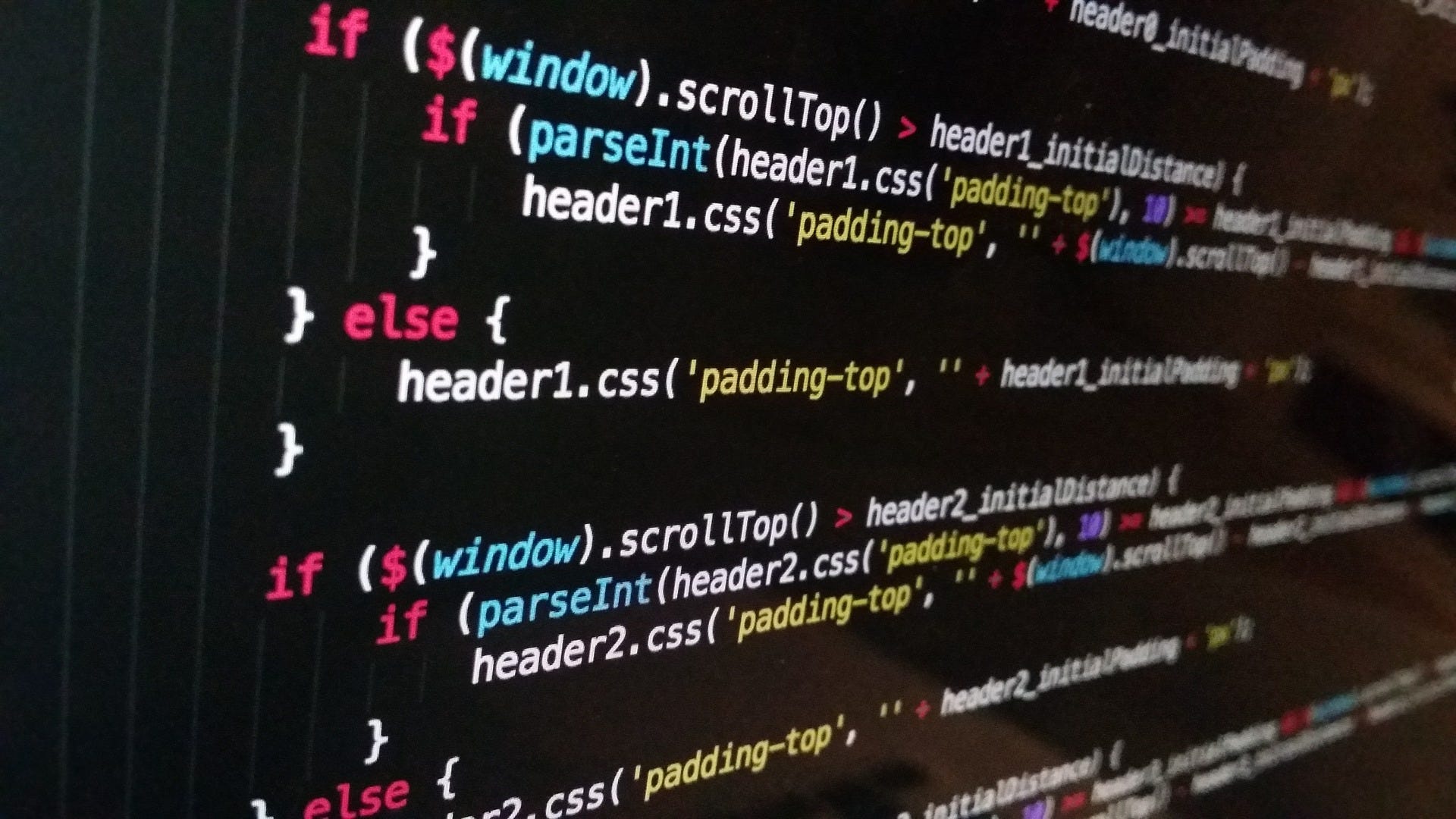
However, the AI produced code had syntactic errors. It didn’t keep track of variable names.  Sometimes variables were declared but never used. Other times variables were used but not defined. The second function in the code example compares "tty == tty".

The project is available on GitHub. It uses the Torch7 deep learning library. Here is the whole output file produced by Karpathy’s exercise.

So, Will AI Replace Programmers?

AI won’t replace programmers. But AI might write code one day.

Of course, it will take time before AI will be able to create actual, production-worthy code that spans more than a few lines.

Advancement in Artificial Intelligence: Human+Machine ...

Here’s how AI will impact software development in the near future.

AI Will Improve

It will become effective at helping developers understand their options. And it will then let the human decide how to optimize for circumstances beyond AI’s understanding.

AI Will Become a Coding Partner

Software developers will use AI as a coding pair to write better software.

But Programmers Will Remain Important

The true value of a programmer is not knowing how to build it. The value is in knowing what to build.

It will take even longer before AI learns how to interpret the business value of each feature and advise you what to develop first. There will always be a role for the human programmer.

What If AI Writes Reliable Code?

That’s a big "if". Most humans can’t write reliable code. And AI is just an application that analyzes vast amounts of human written code. So, it’s unlikely that AI will write reliable code.

So, AI isn’t the answer to improving code quality.

Source: Perforce


 About us: TMA Solutions was established in 1997 to provide quality software outsourcing services to leading companies worldwide. We are one of the largest software outsourcing companies in Vietnam with 2,500 engineers

 Visit us at https://www.tmasolutions.com/

Friday, February 28, 2020

Blockchain development in Vietnam


Vietnam Blockchain country is a big project for turning Vietnam into the next blockchain ecosystem on the world map.
The target is to connect with leaders, policy makers, businesses, profit and non-profit organizations in the blockchain ecosystem in Vietnam.
Infinity Blockchain Labs (IBL) says that if the campaign is successful, Vietnam’s image will be known as a pioneering country of a new technology by international investors. The project is expected to attract an abundant foreign investment in local technological start-ups.
One of the pilot projects is “Fruit chain” which is a solution to retrieve the origin of farm products on the first blockchain platform in Vietnam. Fruitchain is developed by IBL aiming to retrieve transparent information in value chain of the products. 
This project was tested on Cat Chu mango in Dong Thap Province. This is the first step before applications of blockchain technology are applied largely in agricultural area.
In addition, another significant organization of this campaign is Vietnam Blockchain Club. This is a non-profit organization of IBL, which is for connecting other people, sharing knowledge, testing new ideas and building blockchain applications.   
Especially, Vietnam Blockchain Club and IBL are official members of Vietnam Blockchain Branch founded by Vietnam E-Commerce Association (VECOM). The branch focuses on sharing knowledge of blockchain or training blockchain skills for people and business community.
In front of a bright blockchain future of a global digital economy, VECOM suggested Vietnam promote blockchain researchs and applications. Specifically, on April 23rd 2018, VECOM established Vietnam Blockchain Branch. The branch opened officially on June 8th 2018 at the Vietnam Blockchain Summit (VBS) with the topic “From Technology to Policy”.
Furthermore, the branch will associate with authorities and develop policies to improve legal framework as well as instructions, legislation to create an auspicious environment for blockchain applying in Vietnam. Besides, the branch organizes training courses to nurture resources and support start-ups activities of young talents.
IBL’s mission is to push social advancement by developing blockchain's potential and strength to make breakthrough solutions. Moreover, IBL’s vision is to become a leading center in research and developing blockchain technology and apply practical applications in business activities. Finally, further target of IBL is to boost Vietnam’s position as a blockchain country as well as the top choice for international projects.
About us:
TMA Solutions was established in 1997 to provide quality software outsourcing services to leading companies worldwide. We are one of the largest software outsourcing companies in Vietnam with 2,600 engineers. Our engineering team was selected from a large pool of Vietnam IT resources; they are well-trained and have successfully completed many large and complex projects. Please visit us: https://www.tmasolutions.com/   

Monday, February 17, 2020

Adopt AI to tackle IoT security risks

As industry 4.0 trends continue, people are in the middle of an Internet of Things gold rush, with IoT devices are seen everywhere now, from tech giants’ offices to our daily used cars, homes, etc. According to Gartner, the number of IoT devices is expected to grow to 41.6 billion by 2025, along with over 1 trillion USD spent on their development.
The potential is huge, however, there raises an issue of security. The cost of cyber-criminal activity, reported by Fox News, will reach 6 trillion USD by 2021, which poses a big threat to IoT devices.
IoT devices face security threats. Source: IoT Business News
In Internet of Things, every device is connected, hence forming a network with large data sets. Once IoT device is targeted then attacked by hackers, businesses or organizations face a huge loss of data, or data exfiltration, data breaches. This does harm to every businesses, as it can be extraordinary costly for business to regain control of their devices, as well as confidential information can be leaked with abnormal purpose.
In order to manage security risks towards IoT devices, it is suggested that we should use Blockchain or Artificial Intelligence (AI). Blockchain’s outstanding feature is decentralized system, which is suitable to help secure data within connected devices. Meanwhile, AI is believed to have huge potential in tackling IoT security challenges efficiently.  
In detail, AI acts as a brain to help devices make decisions. In this case, people can use AI to predict danger and abnormal act. For instance, when the neural network senses some suspicious action invaded in the devices, it can make that IoT device immediately shut down to avoid further damage.
Artificial Intelligence and Internet of Things are completely independent technologies. These are two important factors in Industry 4.0, and now they can be combined in order to bring more outstanding results. There even appeared a term called “AIoT”, which defines the connected and smart devices that are designed to be self-protected as well as self-corrected. The key difference between Internet of Things (IoT) and Artificial Intelligence of Things (AIoT) is IoT being proactive, while AIoT being reactive.
Source: Data Driven

In short, IoT security risk has always been a great concern for businesses, organizations. With an unstoppable growing volume of data nowadays, it can be extremely harmful for businesses if they lost their control of IoT systems to cyber-criminal. The problems remain unsolved, however, there appears a more comprehensive approach to improve the situation. AIoT is believed to not only solve the existing issue, but also hold great promise for the next development stage of Industry 4.0.


About us

TMA Solutions was established in 1997 to provide quality software outsourcing services to leading companies worldwide. We are one of the largest software outsourcing companies in Vietnam with 2,600 engineers. Our engineering team was selected from a large pool of Vietnam IT resources; they are well-trained and have successfully completed many large and complex projects. Please visit us: https://www.tmasolutions.com/

Monday, January 21, 2019

The Incredible Ways Shell Uses Artificial Intelligence To Help Transform The Oil And Gas Giant

Royal Dutch Shell is heavily investing in research and development of artificial intelligence (AI), which it hopes will provide solutions to some of its most pressing challenges.
From meeting the demands of a transitioning energy market, urgently in need of cleaner and more efficient power, to improving safety on the forecourts of its service stations, AI is at the top of the agenda. I have been working with Shell over the past months to help create a data strategy, which gave me a thorough insight into Shell’s AI priorities and initiatives.

Current initiatives include deploying reinforcement learning in its exploration and drilling program, to reduce the cost of extracting the gas that still drives a significant proportion of its revenues.

Elsewhere across its global business, Shell is rolling out AI at its public electric car charging stations, to manage the shifting demand for power throughout a day. It has also installed computer vision-enabled cameras at service stations, which are capable of detecting customers lighting cigarettes – a severe hazard.
During the data strategy development, I worked with Daniel Jeavons, Shell's general manager for data science. Jeavons talked to me about Shell's  AI-first strategy and said "What it means in practice is that we as a data science team are in a great position because we can make our current business more effective, more efficient, more reliable, safer – by applying AI into those settings.
"But we can also play a role in creating some of the new business models that we want to create, and that's really exciting because we're playing our part in taking Shell into the next generation of energy sources, new fuels, and new sources of revenue."
Precision Drilling
Shell is involved in the entire oil and gas supply chain – from mining raw hydrocarbons from the earth to refining them into fuel and various other products, to retailing them to businesses and individuals. AI is being rolled out or trialed at each step of this process. Recent developments include the adoption of reinforcement learning – a form of “semi-supervised” machine learning, to control its drilling equipment.
While machine learning can work with either labeled data (supervised learning) or unlabelled data (unsupervised learning), reinforcement learning takes a middle-ground approach by incorporating a reward system, dependent on the outcome of the AI's "choices."
As Jeavons says, “The key thing is you’re giving the [AI] agent the autonomy to make the decision. But you’re providing input into the model, so you’re providing reward or penalty functions on the basis of what’s happening in the model, and how the model responds to the set of conditions that you give it.”
Algorithms designed to guide the drills as they move through a subsurface are trained on historical data from Shell’s drilling records, as well as information gathered from simulated exploration. It covers mechanical information from the drill bit, such as temperature and pressures, as well as data on the subsurface from seismic surveys.
The result is that a Shell geosteerer – the human operator of the drilling machine – is able to understand the environment more accurately they are operating in, leading to faster results and less wear, tear and damage to machinery.
In many ways the challenge was similar to those faced by developers working on self-driving cars – only instead of navigating hazards a vehicle might encounter on the road, the drilling machinery must autonomously adapt to changing conditions under the ground.
Jeavons says “We talk a lot about augmented intelligence, and the reason is that this isn’t about removing people from the operation … what we’re trying to do is help the people who make the decisions to make those decisions with additional support from the intelligence that we’ve created.
“What we expect is that this will probably never fully replace geosteering as a discipline, but it will allow a single geosteerer to support many more wells.”
Charging efficiency
Encouraging motorists to switch to an electric vehicle is seen as key to reducing the Co2 emissions caused by humanity, and limiting their effect on climate change. But it involves something of a chicken-and-egg problem. Motorists are put off making the switch due to a lack of public charging terminals, and forecourt operators may be slow to adopt them due to a lack of demand.
Shell’s answer to this problem involves deploying AI to monitor and predict the demand for terminals throughout the day, enabling power to be supplied more efficiently.
“If you think about it,” says Jeavons, "as a grid operator you're operating many, many electric charging posts … if all the cars plug in at the same time and automatically start charging, you create a big load on the grid t, by the way, can't be filled by solar, because it's 7 am or 8 am in the morning."
“So, what we can do by understanding people’s charge profiles is we can spread the load during the day, which basically means we can save the consumer money.
“But also, more renewables are used – because if you can charge more people at lunchtime, there’s going to be more solar on the grid at that point.
“It’s an example of where we see the role of artificial intelligence playing a key part – thinking about not just how we can make things more efficient, but also how we can change energy consumption patterns to take more advantage of renewable sources.”
The program, known as RechargePlus, is currently being rolled out in California.
Monitoring forecourts
Another initiative being trialed in Singapore and Thailand involves the use of computer vision at service station forecourts. Computer vision – cameras which can "think" and understand what they are filming – are trained to watch out for the potential hazard of customers lighting cigarettes in the vicinity of pumps and refueling vehicles.
Camera data is processed by what is essentially the same technology powering Google’s reverse image search, which allows the content of the picture to be labeled and categorized.
When an image is detected that matches what the algorithms “know” (through training) is a person lighting a cigarette, alerts can be issued allowing the forecourt staff to close down nearby pumps and reduce the risk of fires or explosions.
This relies on "edge processing," with camera data being analyzed locally to avoid the delay that would be inevitably caused by sending it to the cloud and back before action could be taken. While it currently focuses on spotting smokers, in the future the technology could also be trained to detect other hazards such as reckless driving, criminal damage or theft.
Shell has certainly progressed a long way on the path towards becoming a truly AI-first organization, and the key to this has been identifying use cases where AI can drive real and immediate value. However, it is likely to face even more significant challenges in the future, if it is to meet its responsibilities around energy transition.
Jeavons says "Artificial intelligence has a huge role to play in energy transformation – we are trying to paint a picture of a way forward for a society that would meet the Paris targets … I think what's important about that, is that oil and gas are going to be a part of that future because it's very hard to move away from it altogether. AI is essential if we're going to make our existing carbon sources of energy more efficient – optimization is going to be massive.
“But there’s also a whole bunch of other energy sources in there as well – and many of the emerging technologies are going to need AI in order to be effective – smart charging is just one.”
TMA Solutions was established in 1997 to provide quality software outsourcing services to leading companies worldwide. We are one of the largest software outsourcing companies in Vietnam with 2,400 engineers. Our engineering team was selected from a large pool of Vietnam IT resources; they are well-trained and have successfully completed many large and complex projects.
Thursday, October 11, 2018

Blockbid partners with Whale Tech and TMA Solutions to create Blockchain Development Centre


Cryptocurrency exchange Blockbid has teamed up with Whale Tech and TMA Solutions to offer end-to-end blockchain development solutions to external companies.
The partnership will aid key blockchain principles, such as smart contract creation, token launches/listings on the Blockbid exchange, smartcontract audits, wallet auditing and custodial services, as well as custom blockchain product development.
Blockbid, Whale Tech and TMA Solutions have recognised there is a global shortage of developers that understand and can develop for blockchain projects. Therefore, this partnership is aimed at helping foster the adoption of blockchain technology and making qualified developers readily available for external projects.
Whale Tech, founded by an experienced blockchain developer Bernard Peh, who himself has 20 years of software development experience on government and large commercial projects, helps governments, companies and individuals to adapt to the blockchain revolution by providing quality Blockchain development services and education.
TMA Solutions, established in 1997, provides software outsourcing services to leading companies worldwide. It is one of the largest software outsourcing companies in Vietnam with 2,400 engineers and has clients from 27 different countries.
The combination of the two, plus the expertise in crypto and trading that Blockbid provide, will make for an invaluable offering for the many companies looking to benefit from the advantages of blockchain technology in the coming years.
David Sapper, COO at Blockbid says: “The partnership with TMA Solutions allows us to scale-up our team almost instantly with a pool of readily available Blockchain developers of the highest possible standard, as educated by Bernard Peh who will be facilitating the upskilling and coursework”.
Bernard Peh, Founder of Whale Tech, says: “I’m very excited about the Blockchain Development Center because it is something that the global market desperately need. The BDC will be an all-in-one go to shop for anyone who needs help to turn their Blockchain ideas into reality. Most importantly, the center is backed by real industry experts.”
Dr. Nguyen Le – Chairman of TMA Solutions says: “The Blockchain Development Centre will leverage TMA’s 21 years of experience in building enterprise software solutions and engineering talents to support companies to develop end-to-end Blockchain solutions more quickly”.

Source: https://coinrivet.com/

Friday, October 5, 2018

The Blockchain-Enabled Intelligent IoT Economy

I. Setting the stage
The IoT and consumer hardware industry have seen multiple failures and a few exits over the last 12–18 months (while the B2B side has been doing a bit better overall) and some criticism has been recently made to the industry to slow down.
In spite though of the current push back, the sector is still increasing and attracting capital and talents. Clearly, there are multiple reasons as to why this is the case, but I firmly believe that one of those reasons is the convergence of IoT and Artificial Intelligence with Blockchain as the infrastructural backbone, which is unlocking the next step not only on the tech side but also on the business side.
The industry has indeed evolved from merely creating products, to create networks of products (namely, Internet of Things), to eventually creating Intelligent networks of products (I-IoT). The transition between the first and the second class was straightforward: it was enough to create more and different products and link them together. This generated many new possibilities, but it was clear from day one that it came with a series of issues hard to tackle, such as security/privacy, validation/authentication, and connectivity bottlenecks.
This is where AI and Blockchain come in. The second transition indeed is made possible through a combination of improvements in computing powers, device miniaturization, ubiquitous wireless connectivity and efficient algorithms (Porter and Heppelmann, 2014). The new class of smart products will be (and already are, to some extent) able to monitor, control, optimize, and automatize processes and products with an accuracy previously not imaginable.
Of course, as often happens, the bonus of integrating those fundamental technologies is that they ended up modifying IoT as much as IoT was impacting them in turn.
This convergence is however not accidental, but rather an inevitable necessity almost designed by default: AI needs data, IoT needs intelligence and insights, and both need security and transparent marketplaces.
The magnitude of this convergence is so high that will affect several sectors swinging from energy and manufacturing to home environment, robotics and drones, supply chain, logistics, and healthcare. Every field which is historically data-rich but information-poor will be touched (or should I say brutally hit?) by those technologies.
I will explore how in the next few sections.

II. How Blockchain is changing IoT
Blockchain as a technology is basically providing the IoT stack with a secure data infrastructure to capture and validate data. As simple as that. At least it is a simple statement that contains three different nuances:
  • Securing data better: The first one is indeed the concept of storing data securely. We know that blockchain protocols are not designed to heavily store data (they are indeed ledgers, not databases), but they can provide “control points” to monitor data access (Outlier Ventures, 2018).
  • Creating the right incentive structure: A blockchain can create the right incentive structure to share IoT data, which is something we are currently missing. Cross-sectional data have been proved to have the most disruptive impact when applied across different industries, but the problem of how and why sharing data in the first place remains. Blockchain (and tokenization) can be used to solve this economic dilemma, and once data are shared can be more easily validated, authenticated and secured.
  • Creating a network of computers: Distributing the workload and implementing parallel computing tasks is something it is usually attributed to new AI or High-Performance Computing (HPC) applications, but a blockchain would be essential in this development for authenticating and validating the single nodes of those networks. Some companies that are working on this problem are Golem, iExec, Onai, Hadron, Hypernet, DeepBrain Chain, etc.
III. How Blockchain can change AI
As I have already previously mentioned, blockchain can affect AI in multiple ways:
  • Help AI explaining itself (and making us believe it): The AI black-box suffers from an explainability problem. Having a clear audit trail can improve the trustworthiness of the data as well as of the models and also provide a clear route to trace back the machine decision process, i.e., where data are coming from, who wrote the original algorithm, what data was used for training, etc. It can establish the foundations for “algorithms standards,” as for example which main algorithms, packages, and framework have been developed using a specific training set. This is also essential in machine-to-machine interactions and transactions (Outlier Ventures, 2017), and provides a secure way to share data and coordinate decisions, as well as a robust mechanism to reach a quorum. This is extremely relevant for swarm robotics and multiple agents scenarios, as mentioned by Rob May, who is a tech investor and Talla's CEO.
  • Increase AI effectiveness: A secure data sharing means more data (and more training data), and then better models, better actions, better results…and better new data. A network effect is all that matters at the end of the day. An example of a multi-application intelligence that uses different sets of data is provided by AIBlockchain.
  • Lower the market barriers to entry: Let’s go step by step. Blockchain technologies can secure your data. So why shouldn’t you store all your data privately and maybe sell it? Well, you probably will. So first of all, blockchain will foster the creation of cleaner and more organized personal data. Second, it will allow the emergence of new marketplaces such as a data marketplace, which is the low-hanging fruit and it has currently been pursued by companies such as Ocean Protocol, OpenMined, Neuromation, BurstIQ, AtMatrix, Effect.ai, Datum, Streamr, Deuro, Datawallet, etc., a models marketplace (e.g., Dbrain, etc.), and finally even an AI marketplace, that companies like SingularityNET, Fetch.ai, doc.ai, Computable Labs, Agorai, and similars are trying to build). Hence, easy data-sharing and new marketplaces, jointly with blockchain data verification, will provide a more fluid integration that lowers the barrier to entry for smaller players and shrinks the competitive advantage of tech giants. In the effort of lowering the barriers to entry, we are then actually solving two problems, such as providing a wider data access and a more efficient data monetization mechanism. It is also possible that a blockchain-enabled AI will eventually create new organizational structures for intelligent agents to cooperate or compete.
  • Reduce catastrophic risks scenario: An AI coded in a DAO with specific smart contracts will be able to only perform those actions, and nothing more because it will have a limited action space.

IV. How AI can change IoT
AI is feeding itself with the new stream of data coming from the physical world and the billions (if not trillions) of sensors and “things” that are capturing and monitoring everything we do.
At the same time though, as soon as an AI starts making sense of IoT data flows, it will:
  • Increase data efficiency: An AI will inform those sensors on what data should be captured and stored, and above all where those sensors should be placed to be both more efficient and more effective.
  • Save costs: It is fair to think that an algorithm performance should be tested continuously, and once reached the optimal level with data marginal return approaching zero - in other words, a point in which adding more data does not improve the prediction outcome -  an AI will not store or capture more data, resulting in energy, servers, computation, cloud, and infrastructural savings. In addition to that, unplanned downtime prediction is a second cost saving possibility an AI will open for an IoT ecosystem.
  • Increase security: An AI could clearly be able to not only fight potential external threats for an IoT network but even predict them. AnChain is doing some interesting work in this field.
  • Compute on-the-fly: Edge/fog computing is quickly becoming a hot topic since it allows on-device computation, which in turn reduces the response time for an action, limits the exposures to privacy and compliance issues and solves the huge connectivity bottleneck problem. A few startups are already working in this direction, as for example Foghorn, Mythic, Neureal, SONM, Nebula AI, as well as big incumbents as Google. The company recently released, in addition to federated learning, an entire stack made by an Edge TPU and a Cloud IoT Edge platform. However, things will likely change here due to the rapid development of specialized training and inference chips and the forthcoming introduction of the 5G. Cloud is still necessary for computationally intensive operations and to store data centrally to guarantee an extra layer of security (especially in case of "network disasters"), but custom chips and edge computing algorithms can do most of the operations the final customer needs directly on the device.
V. How AI can change Blockchain
Although extremely powerful, a blockchain has its own limitations as well. Some of these are technology-related while others come from the old-minded culture inherited from the financial services sector, but all of these can be affected by AI in a way or another:
  • Consensus mechanisms: The proof of work or proof of stake are the first consensus mechanisms created but definitely neither the only ones nor the most efficient. AION has recently created a new consensus mechanism called “Proof of Intelligence” where validators are asked to train a neural network and using the parameters of that NN as proof of computation.
  • Energy consumption: Mining is an incredibly hard task that requires a ton of energy and money to be completed (O’Dwyer and David Malone, 2014). AI has already proven to be very efficient in optimizing energy consumption, so I believe similar results can be achieved for the blockchain as well. This would probably also result in lower investments in mining hardware.
  • Scalability: The blockchain is growing at a steady pace of 1MB every 10 minutes and it already adds up to 85GB. Nakamoto (2008) first mentioned “blockchain pruning” (i.e., deleting unnecessary data about fully spent transactions in order to not hold the entire blockchain on a single laptop) as a possible solution, but AI can introduce new decentralized learning systems such as federated learning, for example, or new data sharding techniques to make the system more efficient. Matrix AI is a company that is leveraging AI to fix some of the intrinsic limits of the blockchain.
  • Security: Even if the blockchain is almost impossible to hack, its further layers and applications are not so secure - see what happened with the DAO, Mt Gox, Bitfinex, etc. The incredible progress made by machine learning in the last two years makes AI a fantastic ally for the blockchain to guarantee a secure applications deployment, especially given the fixed structure of the system. Have a look at what, for example, NuCypher is doing in this space.
  • Privacy: The privacy issue of owning personal data raises regulatory and strategic concerns for competitive advantages (Unicredit, 2016). Homomorphic encryption, which is performing operations directly on encrypted data, the Enigma project (Zyskind et al., 2015) or the Zerocash project (Sasson et al., 2014) are definitely potential solutions, but I see this problem as closely connected to the previous two, i.e., scalability and security, and I think they will go side by side.
  • Efficiency: Deloitte (2016) estimated the total running costs associated with validating and sharing transactions on the blockchain to be as much as $600 million a year. An intelligent system might be eventually able to compute on the fly the likelihood for specific nodes to be the first performing a certain task, giving the possibility to other miners to shut down their efforts for that specific transaction and cut down the total costs. Furthermore, even if some structural constraints are present, a better efficiency and a lower energy consumption may reduce the network latency allowing then faster transactions.
  • Hardware: Miners, not necessarily companies but also individuals, poured an incredible amount of money into specialized hardware components. Since energy consumption has always been a key issue, many solutions have been proposed and much more will be introduced in the future. As soon as the system becomes more efficient, some piece of hardware might be converted for neural nets use. The mining colossus Bitmain is already doing exactly this.
  • Lack of talent: This is a leap of faith, but in the same way we are trying to automate data science itself (unsuccessfully, to my current knowledge), I don’t see why we couldn’t create virtual agents that can create new ledgers themselves, and even interact on it and maintain it.
  • Data gates: In a future where all our data will be available on a blockchain and companies will be able to directly buy them from us, we will need help to grant access, track data usage, and generally make sense of what happens to our personal information at a computer speed. This is a job for (intelligent) machines.
VI. How IoT is affecting AI
The generation and analysis of data that were not available earlier open a new spectrum of possibilities for an AI to:
  • Become more efficient: This is pretty straightforward, but new both structured and unstructured data can feed an AI and be used for new use cases or achieve a better performance on the existing ones.
  • Improve existing design: Products and services are going to be designed differently from how we know them given the new data an algorithm can digest and analyze.
  • Change the buyer-seller dynamic: The internet of things shifts completely and perhaps counterintuitively the attention from the hardware to the software. The sensors (and their costs) are becoming irrelevant and the post-sales improvements that a manufacturer can do without changing the hardware are the real secret sauce to make an AI more efficient.
VII. How IoT could change blockchain
If there is a clear trend emerging, it is that decentralized systems are hard to work with and expensive to maintain. Although the relationship is less intuitive than other more direct links, IoT can help blockchain in:
  • The nodes structure: IoT devices often act as lightweight nodes of the chain, which are those nodes that simply pass data to the full nodes that instead store the data, create new blocks, and ensure validity. Better and more powerful devices, possibly powered by AI, can turn every lightweight node into a full one.
  • Reducing energy consumption: A network of more efficient hardware devices could indeed help to reduce the current energy consumption of blockchain stacks.
  • Reduce bandwidth and data burden: There are multiple ways to design an IoT-blockchain architecture (Reyna et al., 2018), and of course at least one of those architectures may result in a system where IoT devices communicate and share information between them and eventually load on the blockchain only the relevant data, therefore reducing both bandwidth and data burden.
VIII. Conclusions
As you might have noticed, the edges of the impact of one technology on the others and vice-versa often blur, and this is not by chance but an inevitable consequence of technologies that are born and developed to create an “intelligence flywheel.
In addition to unlocking a set of new technological scenarios, the integration of blockchain, IoT and AI has generated new powerful business models. The shift from product to service and ownership to access is the key to understand the magnitude of the changes in the tech ecosystem. Even more radically, product-as-a-service and product-sharing business models are emerging and winning in almost every markets, leaving the manufacturer in charge of the ownership as well as maintaining the full responsibility of the product and service operation.
It is counterintuitive and even a bit absurd, if you think about it, that the surge in the hardware industry is in fact shifting the attention toward a “servitization” model (Porter and Heppelmann, 2014), which clearly makes more sense where the cost of service is a significant part of the greater cost of ownership (that is the case in the current technology landscape).
This integration does not come without issues, as we have seen, both technical and commercial, as much as of design. Data democratization may also soon erode the data moat barrier AI companies are nowadays building their empires on. Software and algorithms are no longer private but rather open-source. Computational power is now affordable and will be processed directly on-device. What does it all mean for the evolution of the industry? Who knows. I have no idea of how these phenomena will shape our businesses and lives, but I am sure that the changes will happen at an exponential rate.

Source: https://www.forbes.com/sites/cognitiveworld/2018/10/04/the-blockchain-enabled-intelligent-iot-economy/#73b94a652a59

IoT poses special cyber risks


 Internet-connected devices pose special risks for federal agencies, and the National Institute of Standards and Technology is developing guidance to meet the need.
Connected sensors, smart-building technology, drones and autonomous vehicles can't be managed in the same way as traditional IT, according to a NIST draft publication, Considerations for Managing Internet of Things (IoT) Cybersecurity and Privacy Risks. The document points out that basic cybersecurity capabilities often aren't available in IoT devices.
Federal agencies must “consider that IoT presents challenges in achieving those [cybersecurity] outcomes or there are challenges that IoT may present in achieving security controls -- and we wanted to highlight those,” Katerina Megas, program manager for NIST's Cybersecurity for Internet of Things program, told FCW at the Internet of Things Global Summit on Oct. 4.

"We felt putting out something initial on IoT was the most important -- to get something out as quickly as possible," she said. "There will be plans in the future to get more focused, more specialized."
One of NIST's next steps is to develop a potential baseline of cybersecurity standards for IoT devices, she said.
NIST is accepting comments on the draft through Oct. 24. Before a final version is published, Megas said, "we plan on starting to release iterative discussion documents to talk about if there were a baseline for IoT devices."
Robert S. Metzger, a government contracting attorney at Rogers Joseph O'Donnell, said that the federal government is exposed to the security and privacy risks of the IoT ecosystem through relationships with vendors.
"The IoT is all over us whether we know it or not,"  Metzger said. "Even if government is not buying it, so many surfaces upon which government depends are using it. Vendors are using it, and so the government becomes, if you will, not so much a hostage but among those exposed to the IoT deployment by commercial enterprises."
Although the IoT creates new and more attack surfaces for potential bad actors, and it opens up both networks and hardware to potential threats, that doesn’t mean it should be shunned, Metzger said at the conference.
One place the government can begin to ask for better security is in the procurement process for these technologies, according to Tom McDermott, the deputy assistant secretary of cyber policy at the Department of Homeland Security.
"We are always looking to think about how we can use federal procurement authority and federal procurement power to drive better cybersecurity outcomes," McDermott said.
A bill proposed by Sens. Mark Warner (D-Va.) and Cory Gardner (R-Colo.) last year would impose basic cybersecurity standards on IoT devices procured by the federal government, including changeable passwords and a requirement that software and firmware be patchable. So far, the bill hasn't advanced, although a companion measure was introduced in the House of Representatives.
Separately, NIST put out a call in April for ideas on lightweight encryption, with an eye to developing security measures that could be deployed on resource-constrained IoT devices.

Source: https://fcw.com/articles/2018/10/04/iot-nist-cyber-leonard.aspx

Thursday, October 4, 2018

A Two-Minute Guide To Artificial Intelligence


If you keep hearing about artificial intelligence but aren’t quite sure what it means or how it works, you’re not alone. 
There’s been much confusion among the general public about the term, not helped by dramatic news stories about how “AI” will destroy jobs, or companies that overstate their abilities to “use AI.”
A lot of that confusion comes from the misuse of terms like AI and machine learning. So here’s a short text-and-video guide to explain them:


What’s the difference between AI and machine learning?
Think of it like the difference between economics and accounting.
Economics is a field of study, but you wouldn’t hire a Nobel Prize-winning economist to do your taxes. Likewise, artificial intelligence is the field of science covering how computers can make decisions as well as humans. But machine-learning refers to the popular, modern-day technique for creating software that learns from data.
The difference becomes important when money is at stake. Venture capital investors often dismiss AI as full of hype because they’ve got skin in the game. They prefer startups that make machine-learning software with a clear, commercial application, like a platform that can filter company emails with natural language processing or track customers in a store with facial recognition (these are real businesses).
On the other hand, universities and some large tech companies like Facebook and Google have large labs carrying out research that drives the wider field of AI forward. A lot of the tools they invent, like TensorFlow from Google or Pytorch from Facebook, are freely available online.

Why does the term “learning” (e.g., deep learning) crop up everywhere? 
Because the most exciting application of AI today gives computers the ability to “learn” how to carry out a task from data, without being programmed to do that task.
The terminology is confusing because this involves a mishmash of different techniques, many of which also have the word “learning” in their names.
There are, for instance, three core types of machine learning, which can all be carried out in different ways: unsupervised, supervised and reinforcement, and they can also be used with statistical machine learning, Baeysean machine learning or symbolic machine learning.
You don’t really need to be clued up on these though, since the most popular applications of machine learning use a neural network.

What’s a neural network?
It’s a computer system loosely inspired by the human brain that’s been going in and out of fashion for more than 70 years.

So what is “deep learning”? 
That’s a specific approach to using a neural network—essentially, a (deep) neural network with lots of layers. The technique has led to popular services we use today, including speech-recognition on smartphones and Google’s automatic translation. 
In practice, each layer can represent increasingly abstract features. A social media company might, for instance, use a “deep neural network” to recognize faces. One of the first layers describes the dark edges around someone’s head, another describes the edges of a nose and mouth, and another describes blotches of shading. The layers become increasingly abstract, but put together they can represent an entire face.

What does a neural network look like on a screen—a jumble of computer code? 
Basically, yes. Engineers at Google’s AI subsidiary DeepMind write nearly all their code in Python, a general purpose programming language first released in 1991.
Python has been used to develop all sorts of programs, both basic and highly complex, including some of the most popular services on the Web today: YouTube, Instagram and Google. You can learn the basics of Python here.

Does everyone agree that deep-learning neural networks is the best approach to AI? 
No. While neural networks combined with deep learning are seen as the most promising approach to AI today, that could all change in five years.

Source: https://www.forbes.com/sites/parmyolson/2018/10/03/a-two-minute-guide-to-artificial-intelligence/#af5b6cb61c0a

Wednesday, April 25, 2018

Software: Database development vs modern computing


The paramount concern for all software developers should always be striving towards a well-structured, quality codebase or else risk ending up with inconsistent, nonsensical code and constant requests against a database.
Modern computing power means many more calculations in a shorter space of time, which has the unfortunate effect of inefficient data access code not actually being shown up by the efficient code as it should be.
This becomes a compound issue with an ORM or an abstracted model, where the code you write doesn’t explicitly point to the fact that the method may select half the database, regardless of your requirement of it.
This may result in unintentionally inefficient code, but if the code runs then why bother concerning yourself with the burden that has been placed within the context of what you just wrote?
Efficient code, when it’s well written, thought out and refactored or re-engineered appropriately, is more maintainable and therefore less confusing to understand the intended implementation. It results in less strain on the database, and the quicker an application can respond to the user’s requests, the more trustworthy and useful it becomes.
This doesn’t mean go and denormalise all your databases; it means take time to think about how you implement the interaction with the database and strive to understand the implications of the code you write. Consider the delay it might cause in growing or already large datasets, slower connections, and the database developer who might be maintaining it in the future.
This also allows for better scalability, regardless of whether or not this was intended originally, bearing in mind that even a little-used application will have a growing database over time. This may sound like it will extend development time, but I firmly believe that the time is wisely spent due to the clarity of the final product.
The evidence of this can be painfully felt when testing, debugging, maintaining and expanding upon code that has not been crafted but rather fired out, coding by coincidence.
If a development team or individual can take the time to consider the words they weave and how the construction takes place, it will directly benefit the individual and should exponentially benefit the team and everyone who happens upon your code in the future.


Tags

Recent Post