Latest News

Showing posts with label blockchain. Show all posts

Thursday, September 3, 2020

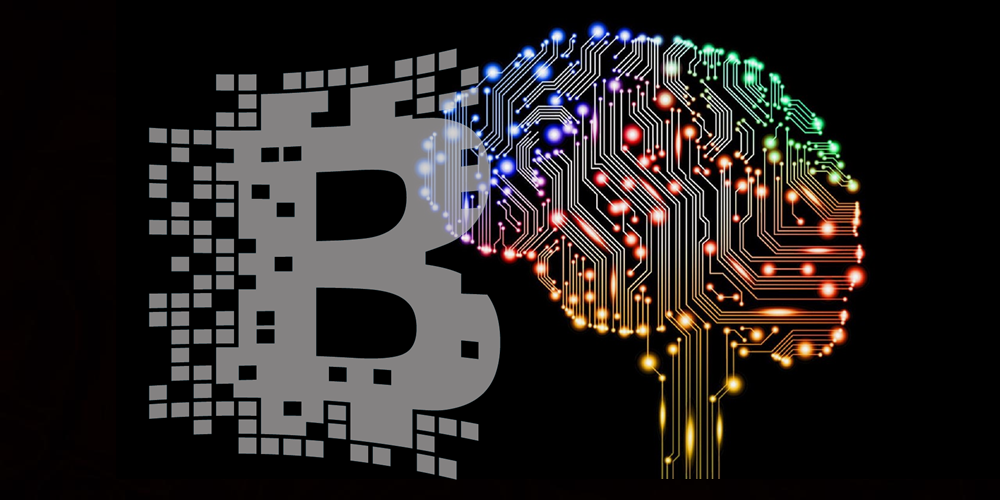
Combination Of AI & Blockchain - The Revolution Of Financial Industry (Part 2)

This part will cover the last three factors when combining Blockchain and Artificial Intelligence in the financial industry. 

    4. A Unique and Financial Trust system

In 2017, after the dramatic drop in Bitcoin's price value and the failure of so many ICO projects, lots of investors started losing trust in cryptocurrencies, which are backed by blockchain. Recently, there is a new blockchain-based solution named DYCO (Dynamic Coin Offerings) – a crowdfunding model designed to offer a guarantee of refunds and protection upon any investment made on any blockchain project, according to Entrepreneur.com. This model can help potential investors scrutinize project whitepapers and choose ICOs with the highest profit potential. Moreover, it helps eliminate any chances of losing your whole invested fund.


Blockchain is inherently perfect for storing highly confidential information because of its immutability features that can’t be altered.  And the application of Artificial intelligence, on the other hand, will help financial companies to boost their income, efficiency, provide detailed insight about data and manage risk as well. Therefore, by combining the unique features of both AI and blockchain, it’s logical to say that there will be a much promising trust system in the financial industry.


    5. Analyzing and Understanding AI Decisions

One of the factors that limit the mass adoption of artificial intelligence is its complexity in interpretation - AI can evaluate many variables unaided. That's the reason why many people won't implement it if they can’t clearly explain computers' decisions, especially when it comes to financial transactions that require thorough investigation.


However, there is existing proof that humans could tamper with the recorded data set for analysis, which is one of the main reasons people are still in doubt when it comes to processing financial transactions.


The combination of blockchain and AI help people disentangle the complexity by making computers to be more transparent. Blockchain is an underlying technology that is known for transparency and immutability. Blockchain can store every decision made by AI and still make them available for analysis, so people can be sure that any financial record or information from entry to examination/audit is tamper-proof.


    6. The challenges when applying Blockchain and AI

Blockchain is known as a decentralized technology capable of bringing solutions to centralized systems, e.g., banking. However, some people see it as a threat to the original will of decentralization when it's being merged with artificial intelligence/ machine learning. This is one of the possible challenges that developers are tirelessly working on solving.


Besides, AI requires access to a pool of data, and incorrect data can ruin both machine learning blockchain technology's integrity and effectiveness. While there are ways to resist erroneous data, it’s still an ongoing obstacle to solve.


Source: DZone


About us: TMA Solutions was established in 1997 to provide quality software outsourcing services to leading companies worldwide. We are one of the largest software outsourcing companies in Vietnam with 2,500 engineers.

Visit us at https://www.tmasolutions.com/

Friday, August 28, 2020

Combination Of AI & Blockchain - The Revolution Of Financial Industry (Part 1)

The revolution in ICT has affected finance industry at an increasing rate for decades. The financial firms are trying to cope with these changes by adopting new kinds of technology to deal with the increasing demand and the huge increase in the competition worldwide in the financial sector.


While so many industries are beginning to embrace the amazing options these technologies – Artificial Intelligence and Blockchain technology offer – helping them to create more value,  boosting sales, and so on,  it’s interesting to know that the combination of both will positively revolutionize the future of the fintech industry.


The convergence of Artificial Intelligence and Blockchain brings a better future for the Financial Industry.

With the superb benefits of Blockchain and AI, this combination will yield bewildering results and take an entirely new level across all industries especially with the financial sector. Here are amazing features and underlying capacities that come to play as below:

Blockchain — backbone of AI infrastructure | by Jura Protocol Media | Medium

1. A Secured Payment Network

One of the underlying benefits of blockchain technology is its unique ability to operate as a borderless payment network. Blockchain facilitates a frictionless payment with low prices and at a faster pace compared to the traditional methods. 


Unfortunately, there are still some existing security concerns affecting its widespread adoption. Theft is increasing and getting more sophisticated daily since it requires a set of public and private keys to run a blockchain business.


By leveraging the power of AI and ML, any improper activities on your blockchain account can be identified, thereby alerting the account owner about some human involvement. Moreover, AI can analyze the behavior and biometrics to help eliminate any security susceptibility in payment networks.

2. Controlled Automation for Financial Activities

There is no doubt that finance is moving towards automation. On the other hand, there are pending issues that could pose threats to the finance sector if ‘calculated restrictions’ aren’t placed on automated processes. Meanwhile, to run a smooth automation financial system, it must occur synchronically with built-in checks and balances. In this case, smart contracts facilitate automatic processes, while AI and ML can look for irregularities simultaneously. Therefore, merging blockchain-powered smart contracts with AI can help verify the smart contracts and predict its vulnerability that can be exploited by theft. The resulting infrastructure would facilitate a completely secure, transparent, and efficient financial transaction.


3. An Efficient Financial Service

About 57% of businesses said that cost-saving is the primary benefit of participating in a consortia blockchain network, according to the 2019 Deloitte’s Global Blockchain Survey. The main reason why financial companies implementing both AI and Blockchain solutions is to improve their service speed and service quality. The result of this combination will help businesses minimize costs, maximize profits while still providing excellent value to customers.

Source: DZone

About us: TMA Solutions was established in 1997 to provide quality software outsourcing services to leading companies worldwide. We are one of the largest software outsourcing companies in Vietnam with 2,500 engineers.

Visit us at https://www.tmasolutions.com/

Thursday, July 23, 2020

Vietnam’s technology skills top two in Asia Pacific

Vietnamese technology skills second in Asia Pacific and 22nd in global, data from the Global Skills Index 2020 report.

In this report - which was published last week, the worldwide online learning platform Coursera benchmarked 10 industries for business and technology skills. Coursera said these are its most popular domains in terms of enrollments and "encapsulate the skills most crucial to the future of work."

Source: LifeSuccess

According to the report, Vietnam’s strongest skill in the technology domain is operating systems (specifically Android and iOS software development), followed by computer networking (blockchain and wireless networking), human-computer interaction (user interface and machine translation), security engineering (cyber attacks and cryptography) and then software engineering (software development and algorithms).

In terms of the technology domain, Vietnam outranked Japan and Australia to finish in second place. The nation scooped 22nd place in the global ranking. Whereas in the business domain, Vietnam ranked seventh in Asia Pacific and 33th in the world. 

Jeff Maggioncalda, CEO of Coursera, stated that in workforce recovery in a post-pandemic world depends on broad-base re-skilling. Educational institutions must lead this effort by proving learners with equal access to skills required for jobs of the future.

Coursera's data indicated every skill proficiency percent gained in a country’s average proficiency (across domains) is associated with a $600 increase in per capita GDP.

Source: VnExpress


About us: TMA Solutions was established in 1997 to provide quality software outsourcing services to leading companies worldwide. We are one of the largest software outsourcing companies in Vietnam with 2,500 engineers.

Visit us at https://www.tmasolutions.com/

Friday, June 12, 2020

Vietnam applies Blockchain technology in building smart cities


HCM City plans to develop a regulatory framework and policies associated with blockchain technology to minimize potential risks in building a smart city, a top city official has said.
Tran Vinh Tuyen, vice chairman of the city’s People’s Committee, said: “The city will give top priorities to projects that apply science and technology, especially the use of artificial intelligence (AI) in solving the city’s problems and for smart urban development.” He also said the city would work with agencies to build a roadmap for the application of blockchain in the country.
After a decade of development, blockchain can now be used to build a secure communication platform for smart cities, providing better public services and optimal utilization of available resources, including e-government, urban transportation, and infrastructure needs.
According to the Asia Blockchain Review, Vietnam has become an emerging leader in the field of blockchain technology. More than 2,000 people attended the Vietnam Blockchain Week Conference last year, indicating that a strong blockchain community is growing well in the country.
Vietnam is among the world’s top 20 countries in terms of the number of internet users, social media users, and smartphone users.
Besides, the young population, fast internet development, and the increased number of e-payments are other factors that make Vietnam favorable for blockchain technology.
The Ministry of Science and Technology will give priority to blockchain start-ups through a new project called “Support a National Innovative Start-up Ecosystem by 2025,” according to Tuyen, vice chairman of the city People’s Committee.
To build a sustainable blockchain ecosystem, all major players including incubators, accelerators, and community building should be involved, experts said.
Vietnam could emerge as one of the next blockchain hubs in Southeast Asia and across the globe, which would help attract foreign investment thanks to huge cryptocurrency transactions and a labor force with a strong caliber, according to Forbes magazine.
Blockchain technology is a shared record of transactions that anyone can see or read. A locking method is employed to prevent any tampering by one party, which helps to make blockchain secure, according to experts.
The conference was attended by hundreds of local and international researchers, entrepreneurs, start-up representatives, and managers in the field of blockchain.

Source: Vietnamnews
About TMA: TMA Solutions was established in 1997 to provide quality software outsourcing services to leading companies worldwide. We are one of the largest software outsourcing companies in Vietnam with 2,500 engineers.

Visit us at https://www.tmasolutions.com/

Friday, February 28, 2020

Blockchain development in Vietnam


Vietnam Blockchain country is a big project for turning Vietnam into the next blockchain ecosystem on the world map.
The target is to connect with leaders, policy makers, businesses, profit and non-profit organizations in the blockchain ecosystem in Vietnam.
Infinity Blockchain Labs (IBL) says that if the campaign is successful, Vietnam’s image will be known as a pioneering country of a new technology by international investors. The project is expected to attract an abundant foreign investment in local technological start-ups.
One of the pilot projects is “Fruit chain” which is a solution to retrieve the origin of farm products on the first blockchain platform in Vietnam. Fruitchain is developed by IBL aiming to retrieve transparent information in value chain of the products. 
This project was tested on Cat Chu mango in Dong Thap Province. This is the first step before applications of blockchain technology are applied largely in agricultural area.
In addition, another significant organization of this campaign is Vietnam Blockchain Club. This is a non-profit organization of IBL, which is for connecting other people, sharing knowledge, testing new ideas and building blockchain applications.   
Especially, Vietnam Blockchain Club and IBL are official members of Vietnam Blockchain Branch founded by Vietnam E-Commerce Association (VECOM). The branch focuses on sharing knowledge of blockchain or training blockchain skills for people and business community.
In front of a bright blockchain future of a global digital economy, VECOM suggested Vietnam promote blockchain researchs and applications. Specifically, on April 23rd 2018, VECOM established Vietnam Blockchain Branch. The branch opened officially on June 8th 2018 at the Vietnam Blockchain Summit (VBS) with the topic “From Technology to Policy”.
Furthermore, the branch will associate with authorities and develop policies to improve legal framework as well as instructions, legislation to create an auspicious environment for blockchain applying in Vietnam. Besides, the branch organizes training courses to nurture resources and support start-ups activities of young talents.
IBL’s mission is to push social advancement by developing blockchain's potential and strength to make breakthrough solutions. Moreover, IBL’s vision is to become a leading center in research and developing blockchain technology and apply practical applications in business activities. Finally, further target of IBL is to boost Vietnam’s position as a blockchain country as well as the top choice for international projects.
About us:
TMA Solutions was established in 1997 to provide quality software outsourcing services to leading companies worldwide. We are one of the largest software outsourcing companies in Vietnam with 2,600 engineers. Our engineering team was selected from a large pool of Vietnam IT resources; they are well-trained and have successfully completed many large and complex projects. Please visit us: https://www.tmasolutions.com/   

Monday, February 17, 2020

Adopt AI to tackle IoT security risks

As industry 4.0 trends continue, people are in the middle of an Internet of Things gold rush, with IoT devices are seen everywhere now, from tech giants’ offices to our daily used cars, homes, etc. According to Gartner, the number of IoT devices is expected to grow to 41.6 billion by 2025, along with over 1 trillion USD spent on their development.
The potential is huge, however, there raises an issue of security. The cost of cyber-criminal activity, reported by Fox News, will reach 6 trillion USD by 2021, which poses a big threat to IoT devices.
IoT devices face security threats. Source: IoT Business News
In Internet of Things, every device is connected, hence forming a network with large data sets. Once IoT device is targeted then attacked by hackers, businesses or organizations face a huge loss of data, or data exfiltration, data breaches. This does harm to every businesses, as it can be extraordinary costly for business to regain control of their devices, as well as confidential information can be leaked with abnormal purpose.
In order to manage security risks towards IoT devices, it is suggested that we should use Blockchain or Artificial Intelligence (AI). Blockchain’s outstanding feature is decentralized system, which is suitable to help secure data within connected devices. Meanwhile, AI is believed to have huge potential in tackling IoT security challenges efficiently.  
In detail, AI acts as a brain to help devices make decisions. In this case, people can use AI to predict danger and abnormal act. For instance, when the neural network senses some suspicious action invaded in the devices, it can make that IoT device immediately shut down to avoid further damage.
Artificial Intelligence and Internet of Things are completely independent technologies. These are two important factors in Industry 4.0, and now they can be combined in order to bring more outstanding results. There even appeared a term called “AIoT”, which defines the connected and smart devices that are designed to be self-protected as well as self-corrected. The key difference between Internet of Things (IoT) and Artificial Intelligence of Things (AIoT) is IoT being proactive, while AIoT being reactive.
Source: Data Driven

In short, IoT security risk has always been a great concern for businesses, organizations. With an unstoppable growing volume of data nowadays, it can be extremely harmful for businesses if they lost their control of IoT systems to cyber-criminal. The problems remain unsolved, however, there appears a more comprehensive approach to improve the situation. AIoT is believed to not only solve the existing issue, but also hold great promise for the next development stage of Industry 4.0.


About us: 

TMA Solutions was established in 1997 to provide quality software outsourcing services to leading companies worldwide. We are one of the largest software outsourcing companies in Vietnam with 2,600 engineers. Our engineering team was selected from a large pool of Vietnam IT resources; they are well-trained and have successfully completed many large and complex projects. Please visit us: https://www.tmasolutions.com/

Monday, December 30, 2019

Top 5 digital transformation trends in 2020

2019 is likely to be recorded as a turning point when digital technology innovation has become so popular. In recent years, technological innovation has become an irreversible and accelerating trend. Industries are forced to adapt to new ways of doing business, mostly related to the digital transformation the world has been experiencing, from artificial intelligence (AI) to blockchain and the Internet of Things (IoT). New digital technology is having a strong impact on all industries, and it is expected that the impact will increase strongly in 2020.

According to a 2016 Harvard Business School study, businesses that applied digital transformation have grown an average of 55% of their total profits over a three-year period, while the rest have grown only 37 % in the same period. According to another study conducted and published by DXC and The Economist, 68% of senior business leaders said profit growth over the past three years was the result of digital transformation. In this context, the Information Age website has launched five major digital transformation trends that businesses need to embrace in 2020.

1. IoT is the engine of digital technology growth:
There are an estimated 27 billion IoT devices in the world as of August 2019, and this number is expected to increase to 75 billion by 2025. There are currently 8.4 billion connected devices around the world. The importance of IoT is to help technologies such as advanced analytics, 5G telecommunications networks, sensor technology and edge computing become truly effective. With vast amounts of data flowing from smart devices, businesses now focus specifically on an analytical system, based on AI, so that they can take appropriate action.

Because most companies want information in real-time, or as close to reality as possible, media businesses need to develop fast and efficient networks that deliver large amounts of data in the shortest possible time. That is why 5G telecom networks are paying special attention. Along with the fact that IoT devices are so popular, many businesses will find data processing in many places more beneficial than centralizing on one main server, thereby leading to the development of edge computing systems.

2. Speed is number 1:
In the digital age, the basic competition principle has never changed. To gain business interests, you must be the first and also the best. Going forward means having to enter the market and have a specific number of customers before the competition in the world begins, creating the necessary supply to launch the product or service first, as well as having the ability to quickly plan and allocate personnel when the company expands. All of this requires a fast processing process, with smarter and faster ways to find information, as well as a faster and more efficient way to evaluate and classify data.

3. The explosion of blockchain:
With the value of Bitcoin currently valued at an all-time high, it is understandable that the technology that powers the virtual currency is starting to receive great attention. A recent study by Deloitte audit firm said that 55% of participants said that blockchain is being prioritized in their organizations, up 10 percentage points compared to 2018. The fact that blockchain is also very useful for any goods that require origin, from wine to international shipping products; or content payment systems; is even used to set up electric vehicle charging infrastructure.

4. AI:
AI is one of the phrases that have received the most interesting responses. Workers may worry, fear that the "army" of robots will replace them, while employers think about the profits that AI can bring when applied more and more. Currently, AI is mostly used as chatbots in customer contact, and is not very successful. However, as technology advances, more AI applications could help businesses grow their facilities, especially in areas such as marketing, analytics, customer service, and automation. chemistry.

AI helps businesses formulate marketing strategies and business plans through data analysis and aggregation. It can also help producers produce more efficiently, through operational analysis, or as helping the government allocate resources most effectively. Even AI helps medical researchers analyze patient data to determine the appropriate and better treatment.

5. From ITOps to NoOps: Smart data management:
Traditionally, the IT department has always been responsible for every computer-related issue in an organization. Although this structure is convenient when problems arise, it is difficult to manage resources because the management department often does not understand IT related issues. Therefore, by moving many services and applications to the "cloud", organizations will be able to manage better.

In that context, the next big trend is the automation of ITOps, by adopting intelligent systems, based on AI, to help make things smoother. In an automated NoOps computing environment and AI applications, things like updating or changing the system are automatically done by intelligent systems, thereby avoiding the possibility of human error. However, to successfully apply AI to IT departments or other departments, organizations need to be ready for this idea. Because it means many departments will have to give up control over the years, as well as get used to the new way. To overcome this, it is necessary to ensure that all employees understand the situation and that the management must also realize that AI needs to be an integral part of the operation of the entire organization.

About us:
TMA Solutions was established in 1997 to provide quality software outsourcing services to leading companies worldwide. We are one of the largest software outsourcing companies in Vietnam with 2,600 engineers. Our engineering team was selected from a large pool of Vietnam IT resources; they are well-trained and have successfully completed many large and complex projects. Visit us at: https://www.tmasolutions.com/

Sunday, August 11, 2019

Blockchain technology predicts the future of the financial industry in Vietnam


Image result for blockchain

Dr. Chris Berg from RMIT University in Australia said that in the context of the current industrial revolution, Blockchain is increasingly known as a technology with great potential in the world as well as in Vietnam.

With preeminent features such as high security and indelible, technology experts evaluate that Blockchain will be applied in many fields such as financial technology, banking, manufacturing industry, services, supply chains. education. In addition, Blockchain is also used in government agencies to manage population and transport data.

Taking specific examples of banking and finance, Blockchain technology allows managing data, assets and securing transactions.

Blockchain technology with complex algorithms and high security allows to disable data modification intervention and greatly reduce the possibility of errors when compare complex information from various sources . Blockchain also eliminates the need to use an intermediary (third party), contributes to speed up payment and reduce costs in transactions.

Because of these benefits, this technology is being promoted in interbank transactions, helping to ensure a higher level of security than traditional trading methods. "Blockchain is one of the driving forces of today's 4.0 industrial revolution. Blockchain is also the foundation for the application of artificial intelligence, automation and big data technologies." Dr. Chris Berg emphasized.

According to experts from RMIT University, the development of Blockchain is also an opportunity for Vietnam to explore, exploit and apply in many fields, especially in manufacturing and financial development. Because of the huge potential for application in the financial industry, Vietnam can embark on a study of Blockchain technology to create great leaps in the future. According to Dr. Chris Berg, businesses in Vietnam are also interested in Blockchain technology at the supply chain optimization level as an application to monitor the flow of importing and exporting goods.

"It is expected that we will replicate Blockchain undergraduate and postgraduate courses, hoping to deploy them in Vietnam at the beginning of 2020," said Dr. Chris Berg.

About us:

TMA Solutions was established in 1997 to provide quality software outsourcing services to leading companies worldwide. We are one of the largest software outsourcing companies in Vietnam with 2,400 engineers. Our engineering team was selected from a large pool of Vietnam IT resources; they are well-trained and have successfully completed many large and complex projects. Visit us at: https://www.tmasolutions.com/

Monday, January 28, 2019

5 Blockchain Trends Everyone Should Know About

Blockchain traveled a rocky road in 2018 but is still hotly tipped as a technology with huge potential for transforming business and day-to-day life.
The past year saw huge drops in value for its flagship use case – cryptocurrency Bitcoin – and reports that many pilot programs are failing to show true value. However, many big players including IBM and Walmart are continuing to push ahead, confident it can provide real value for organizations in need of innovative solutions around record keeping and secure recording of transactions.
So, here are my five predictions for how we’re likely to see blockchain use growing and continuing to make headlines – although they may be slightly less hyperbolic – in 2019.

Less Hype and Scams, More Substance
Any new technology has the potential to attract snake-oil salesman, and perhaps blockchain attracted more than most. This meant that 2018 saw regulators stepping in, meaning that those offering “miracle solutions” and get-rich-quick schemes built (or not built) on blockchain should be far less visible in the next 12 months.
What we should see instead is results of more considered, mature endeavors in the blockchain arena. Businesses such as Walmart that is investing in solutions designed to shore up food safety standards in the wake of crises such as 2018's E.coli outbreak. Walmart's solution means anyone involved in the supply of certain products will be able to trace individual items back to the farm where they were grown, using a tamper-proof distributed database.
Amazon is also announcing blockchain projects for this year – with two blockchain initiatives aiming to enable its AWS customers to take advantage of distributed ledger technology in their own projects.
With big players like those two (and others) entering the game, it seems certain that blockchain will start to demonstrate that it can bring real value during 2019.
The Blockchain and Internet of Things Convergence Continues to Gather Pace
According to one report, the use of blockchain technology to secure data and devices in the internet of things (IoT) doubled during 2018. This trend is likely to continue next year and beyond, as more organizations wake up to the potential of distributed, encrypted ledger technology in this field. The powerful encryption used to secure blockchains means that attackers need a vast amount of computing power to brute-force their way into just one node. Additionally, their decentralized nature means attackers can't bypass security by disabling a single-point-of-failure with, for example, a denial-of-service attack.
As well as security, blockchain offers utility benefits in the IoT field, too. With the number of connected devices predicted to top 26 billion during 2019, vast amounts of machine-to-machine communication will be taking place, at far too high a speed for humans to keep up manually. Experts predict that blockchains will increasingly be used to log and monitor these communications and transactions, and although this convergence is at a very early stage, 2019 will see an explosion in its use.
More Blockchain Offerings from the Financial Services Industry
Cryptocurrency values may have taken a hammering during 2018, due in no small part to a bursting of the speculative bubble built up around the arrival of such potentially transformative technology.
But the mainstream financial services industry was undoubtedly shaken by the emergence of this tech and the potential it has to disrupt their businesses. So much so that it seems likely they will be at the forefront of the next wave, when it comes crashing in.  One example is Bakkt, the Bitcoin-based futures trading platform planned by ICE, the operator the New York Stock Exchange.
In developing markets particularly, where much of the population is labeled "unbankable” due to institutions’ inability or unwillingness to connect them to its services, start-ups are likely to lead the way with innovative services built around blockchains and digital, fraud-resistant currencies, storage, and transfer mechanisms.
More Investment Opportunities
Not just in quirky, unknown cryptocurrencies with unproven use cases – blockchain technology makes it possible to offer and track investments in a whole range of asset classes that traditionally have been the preserve of institutional investors and the wealthy.
For example, tokenization lowers the bar to entry for investment in property, potentially allowing more liquid trading of high-value assets and allowing more of us a slice of the pie of the growth (or losses) they can generate. Regulation will be needed before these investment opportunities will be considered safe enough for everyday investors to take part, and as we’ve seen over the last year, this certainly seems to be on its way.
Art, fine wines and property are all examples of investment assets that traditionally were only an option for well-off investors with the luxury of being able to put capital in up-front and be in no hurry for their investment to pay off. With regulation in place, everyday investors can purchase digitally-backed “shares” in these asset classes and sell them off when they need to liquidate their funds.
Additionally, blockchain-based “smart contracts" are designed to reduce the reliance on middlemen such as brokers and lawyers when establishing these transactions, further lowering the costs and barriers to entry.
Bitcoin (and other cryptocurrencies) will still be big business
I’m not going to be stupid or irresponsible enough to predict that the value of cryptocurrencies is going to shoot into the stratosphere (again) in 2019. As I’ve said before, speculating on the value of these digital assets isn’t my business, and if the tumultuous volatility of recent years proves anything, it’s that no one can accurately predict what will happen next.
One thing that is clear, though, is that cryptocurrencies are far from dead. Using the Bitcoin price as a benchmark, prices are still some ten times higher than they were two years ago, and trading volumes on exchanges show there is still a healthy appetite for speculative investment.
And that’s before we even start to consider the possible future of alternative cryptocurrencies such as Ethereum, Ripple and Tether, that all promise to improve on Bitcoin in some way – offering more utility, security or speed.
During 2019, we may not see a return to the highs of 2017, when the value of crypto assets in circulation worldwide came close to three-quarters of a trillion dollars. But we could see a continuation of the period of relative stability that we saw during 2018. And as the public’s understanding of what cryptocurrencies offer (beyond get-rich-quick schemes) grows, the foundations of a more useful and valuable crypto ecosystem beginning to emerge.

Friday, January 11, 2019

In The Global Village, Trust Depends On Blockchain

Marshal McLuhan’s Predictions Highlight A New Set Of Problems And Solutions

Last month, ‘Jenny Davies’ an 18 year old graduate living in New York,  took a call she thought was from her bank; unfortunately for her, she didn’t think to properly identify the caller. They told her that they’d seen some unusual activity on her account, and that she needed her to move her money to another account. She was to call the bank back on the number provided to make the arrangement, which she duly did.
As directed, she transferred $15,000 in three separate tranches, money she had saved for a post-graduation life outside her native Australia. This was just below the minimum to attract attention from a regulatory department. Two days later, Jenny realised she’s been defrauded of the entire sum.
This is just one scam in a series going on in the US and elsewhere.
At the root of the issue perhaps is this: Banks identify us to prove we are who we say we are, but we don’t have any reliable means of identifying them.
The confidence trick on Ms Davies revolves around our collective habit of never consciously identifying banks. Sure a validation often takes place, but it’s an unconscious one.
We know the bank in the middle of our high street is the real one because of the cost to create a fake Citibank or Chase bank there, what the security industry calls a ‘spoof’ is too great, and the effort too large.  The building is substantial and could never really be a fake. The cost of bricks and mortar is the validator. Or was the validator.

About us

TMA Solutions was established in 1997 to provide quality software outsourcing services to leading companies worldwide. We are one of the largest software outsourcing companies in Vietnam with 2,400 engineers. Our engineering team was selected from a large pool of Vietnam IT resources; they are well-trained and have successfully completed many large and complex projects.

Wednesday, October 31, 2018

Could Blockchain Innovations Improve Latency And Inefficiency In Banking?


Ah, latency. That seven-letter word takes nearly seven seconds to say and what feels like forever to settle. In simple terms, latency is the delay before data is moved. In the banking world, latency is the time it takes for money to move across a ledger, which is a book of accounts where transactions are balanced.
According to Merriam-Webster, the word "ledger" comes from the English dialect form leggen, meaning "to lay." I don't believe there’s any denying that money sometimes sits, lies or ostensibly takes a nap when we need it most. Think of all those times you’ve deposited a check into your bank account and have had to wait days to access your money. Issues like these are painful. In fact, as MarketWatch reported, it’s likely you’ll only be able to access a fraction of checks you deposit until the respective banks release their hold.
Another area I believe the banking industry is lagging on is money management services. It’s still common for brick-and-mortar banks to have someone in a suit selling financial services and advice. I feel people should just as easily be able to log in to their mobile device and download a financial app to eliminate the need for that type of in-person service.

Similarly, some insurance companies are still using expensive, commission-driven salespeople, while artificial intelligence (AI) and smart contracts could potentially determine the needs of a consumer and spin up a contract, payments and the delivery of benefits faster, cheaper and better.
With that, you as an innovator can ask yourself: How can I work to speed up and improve the movement of money, information, and services to eliminate the wait? Let’s take a look.

Digital And Mobile Banking Revolution

Around the Great Recession of 2008, many millennials were coming of age and expressing their dissatisfaction with the status quo through movements like Occupy Wall Street. At that time, one could also observe a rise of distrust in banks. Why? In my experience, it's partly because there's a perception that banks profit from the status quo.
The opportunity for businesses lies in innovations that eliminate latency, inefficiencies, costs, unnecessary processes and procedures, error resolution, data corruption, and security hacks. The results of these innovations could include restored trust, which would be a win-win for both financial institutions and their customers.
Over the past decade, I've noticed that the financial industry has witnessed a gargantuan pivot from traditional banking methodologies to financial-technology-driven applications. Millennials, with Gen Z on their heels, may become the reigning economic powerhouse over the medium term — Pew reported their adult numbers will likely outnumber baby boomers' in 2019. They're thinking differently about how they bank. In a world where financial institutions are competing with innovations where you can order a ride or takeout with the push of a button, they need to be thinking about how to make financial solutions available just as quickly.
While the $200-billion-plus cryptocurrency market catapults us light-years into the future technologically, there's still work to be done. For example, large banks, brokers, securities firms, clearing companies, money transmitters and so on, seem to be at the early stages of tapping the power of blockchain technology, distributed ledger technology (DLT), smart contracts, artificial intelligence, machine learning and other technology to change the future and security of money.
Blockchain In Insurance
One of the areas where innovators can begin thinking about using technologies like blockchain would be in the insurance industry, as noted above, to create reliable registries, expand the payment infrastructure, offer microinsurance, automate contracts and payments and to evaluate claims. The benefit would be a boost in customer trust, speed and the ability to drive and compress costs on an operational level. At the end of the day, it could also reduce fraud. (See below.)
I believe blockchain in insurance is a lot further along in ideation than reality. That’s where innovators come in: to harness the power of this technology and close the gap between ideas and implementation.
Blockchain In Finance
Imagine blockchain implementation in a system like the Automated Clearing House (ACH) as a shared distributed ledger technology that all banks could access. If that happened, it would basically become an interledger — a protocol for connecting blockchains and ledgers — that could introduce immutable data and eliminate all kinds of latency.
Blockchain In Identity Protection
We’ve all heard about the Equifax hack, and we know identity verification is one of the biggest challenges we face globally. Now, imagine a world where blockchain stored all your information. I believe blockchain could not only store a person’s ID in the future but that it could also be an immutable solution that integrates a lot of information (like biometrics and addresses) into one system, which could make it harder for a person’s identity to be stolen. This is one of the most powerful blockchain applications I see that innovators should be thinking about.
The dark side of this, however, is that if someone did figure out how to break in, it could be catastrophic. That is our great unknown.
Next Steps
The most interesting aspect of blockchain to me is the structure, which is different from what we have experienced over the past 20 years with the explosion of the internet. HTML’s single stand-alone protocol was used to create the container that held all the websites on the internet. It seemed protocol-thin and application-heavy. The blockchain is different to me; blockchain is protocol-thick and thin at the application level so it may require a re-engineering of the mindset to implement. I believe we must think of ways to innovate using blockchain because we're trained to build at the consumer (application) layer, while blockchain is all about establishing protocols.
To adopt a blockchain mindset, imagine this: You step away from your LaFerrari and start operating a tunnel-boring machine. The blockchain is not about innovating beauty; it’s about building a balanced foundation that can change the world.

Source: https://www.forbes.com/sites/forbesfinancecouncil/2018/10/30/could-blockchain-innovations-improve-latency-and-inefficiency-in-banking/#39e98fbc480a

Thursday, October 11, 2018

Blockbid partners with Whale Tech and TMA Solutions to create Blockchain Development Centre


Cryptocurrency exchange Blockbid has teamed up with Whale Tech and TMA Solutions to offer end-to-end blockchain development solutions to external companies.
The partnership will aid key blockchain principles, such as smart contract creation, token launches/listings on the Blockbid exchange, smartcontract audits, wallet auditing and custodial services, as well as custom blockchain product development.
Blockbid, Whale Tech and TMA Solutions have recognised there is a global shortage of developers that understand and can develop for blockchain projects. Therefore, this partnership is aimed at helping foster the adoption of blockchain technology and making qualified developers readily available for external projects.
Whale Tech, founded by an experienced blockchain developer Bernard Peh, who himself has 20 years of software development experience on government and large commercial projects, helps governments, companies and individuals to adapt to the blockchain revolution by providing quality Blockchain development services and education.
TMA Solutions, established in 1997, provides software outsourcing services to leading companies worldwide. It is one of the largest software outsourcing companies in Vietnam with 2,400 engineers and has clients from 27 different countries.
The combination of the two, plus the expertise in crypto and trading that Blockbid provide, will make for an invaluable offering for the many companies looking to benefit from the advantages of blockchain technology in the coming years.
David Sapper, COO at Blockbid says: “The partnership with TMA Solutions allows us to scale-up our team almost instantly with a pool of readily available Blockchain developers of the highest possible standard, as educated by Bernard Peh who will be facilitating the upskilling and coursework”.
Bernard Peh, Founder of Whale Tech, says: “I’m very excited about the Blockchain Development Center because it is something that the global market desperately need. The BDC will be an all-in-one go to shop for anyone who needs help to turn their Blockchain ideas into reality. Most importantly, the center is backed by real industry experts.”
Dr. Nguyen Le – Chairman of TMA Solutions says: “The Blockchain Development Centre will leverage TMA’s 21 years of experience in building enterprise software solutions and engineering talents to support companies to develop end-to-end Blockchain solutions more quickly”.

Source: https://coinrivet.com/

Friday, October 5, 2018

The Blockchain-Enabled Intelligent IoT Economy

I. Setting the stage
The IoT and consumer hardware industry have seen multiple failures and a few exits over the last 12–18 months (while the B2B side has been doing a bit better overall) and some criticism has been recently made to the industry to slow down.
In spite though of the current push back, the sector is still increasing and attracting capital and talents. Clearly, there are multiple reasons as to why this is the case, but I firmly believe that one of those reasons is the convergence of IoT and Artificial Intelligence with Blockchain as the infrastructural backbone, which is unlocking the next step not only on the tech side but also on the business side.
The industry has indeed evolved from merely creating products, to create networks of products (namely, Internet of Things), to eventually creating Intelligent networks of products (I-IoT). The transition between the first and the second class was straightforward: it was enough to create more and different products and link them together. This generated many new possibilities, but it was clear from day one that it came with a series of issues hard to tackle, such as security/privacy, validation/authentication, and connectivity bottlenecks.
This is where AI and Blockchain come in. The second transition indeed is made possible through a combination of improvements in computing powers, device miniaturization, ubiquitous wireless connectivity and efficient algorithms (Porter and Heppelmann, 2014). The new class of smart products will be (and already are, to some extent) able to monitor, control, optimize, and automatize processes and products with an accuracy previously not imaginable.
Of course, as often happens, the bonus of integrating those fundamental technologies is that they ended up modifying IoT as much as IoT was impacting them in turn.
This convergence is however not accidental, but rather an inevitable necessity almost designed by default: AI needs data, IoT needs intelligence and insights, and both need security and transparent marketplaces.
The magnitude of this convergence is so high that will affect several sectors swinging from energy and manufacturing to home environment, robotics and drones, supply chain, logistics, and healthcare. Every field which is historically data-rich but information-poor will be touched (or should I say brutally hit?) by those technologies.
I will explore how in the next few sections.

II. How Blockchain is changing IoT
Blockchain as a technology is basically providing the IoT stack with a secure data infrastructure to capture and validate data. As simple as that. At least it is a simple statement that contains three different nuances:
  • Securing data better: The first one is indeed the concept of storing data securely. We know that blockchain protocols are not designed to heavily store data (they are indeed ledgers, not databases), but they can provide “control points” to monitor data access (Outlier Ventures, 2018).
  • Creating the right incentive structure: A blockchain can create the right incentive structure to share IoT data, which is something we are currently missing. Cross-sectional data have been proved to have the most disruptive impact when applied across different industries, but the problem of how and why sharing data in the first place remains. Blockchain (and tokenization) can be used to solve this economic dilemma, and once data are shared can be more easily validated, authenticated and secured.
  • Creating a network of computers: Distributing the workload and implementing parallel computing tasks is something it is usually attributed to new AI or High-Performance Computing (HPC) applications, but a blockchain would be essential in this development for authenticating and validating the single nodes of those networks. Some companies that are working on this problem are Golem, iExec, Onai, Hadron, Hypernet, DeepBrain Chain, etc.
III. How Blockchain can change AI
As I have already previously mentioned, blockchain can affect AI in multiple ways:
  • Help AI explaining itself (and making us believe it): The AI black-box suffers from an explainability problem. Having a clear audit trail can improve the trustworthiness of the data as well as of the models and also provide a clear route to trace back the machine decision process, i.e., where data are coming from, who wrote the original algorithm, what data was used for training, etc. It can establish the foundations for “algorithms standards,” as for example which main algorithms, packages, and framework have been developed using a specific training set. This is also essential in machine-to-machine interactions and transactions (Outlier Ventures, 2017), and provides a secure way to share data and coordinate decisions, as well as a robust mechanism to reach a quorum. This is extremely relevant for swarm robotics and multiple agents scenarios, as mentioned by Rob May, who is a tech investor and Talla's CEO.
  • Increase AI effectiveness: A secure data sharing means more data (and more training data), and then better models, better actions, better results…and better new data. A network effect is all that matters at the end of the day. An example of a multi-application intelligence that uses different sets of data is provided by AIBlockchain.
  • Lower the market barriers to entry: Let’s go step by step. Blockchain technologies can secure your data. So why shouldn’t you store all your data privately and maybe sell it? Well, you probably will. So first of all, blockchain will foster the creation of cleaner and more organized personal data. Second, it will allow the emergence of new marketplaces such as a data marketplace, which is the low-hanging fruit and it has currently been pursued by companies such as Ocean Protocol, OpenMined, Neuromation, BurstIQ, AtMatrix, Effect.ai, Datum, Streamr, Deuro, Datawallet, etc., a models marketplace (e.g., Dbrain, etc.), and finally even an AI marketplace, that companies like SingularityNET, Fetch.ai, doc.ai, Computable Labs, Agorai, and similars are trying to build). Hence, easy data-sharing and new marketplaces, jointly with blockchain data verification, will provide a more fluid integration that lowers the barrier to entry for smaller players and shrinks the competitive advantage of tech giants. In the effort of lowering the barriers to entry, we are then actually solving two problems, such as providing a wider data access and a more efficient data monetization mechanism. It is also possible that a blockchain-enabled AI will eventually create new organizational structures for intelligent agents to cooperate or compete.
  • Reduce catastrophic risks scenario: An AI coded in a DAO with specific smart contracts will be able to only perform those actions, and nothing more because it will have a limited action space.

IV. How AI can change IoT
AI is feeding itself with the new stream of data coming from the physical world and the billions (if not trillions) of sensors and “things” that are capturing and monitoring everything we do.
At the same time though, as soon as an AI starts making sense of IoT data flows, it will:
  • Increase data efficiency: An AI will inform those sensors on what data should be captured and stored, and above all where those sensors should be placed to be both more efficient and more effective.
  • Save costs: It is fair to think that an algorithm performance should be tested continuously, and once reached the optimal level with data marginal return approaching zero - in other words, a point in which adding more data does not improve the prediction outcome -  an AI will not store or capture more data, resulting in energy, servers, computation, cloud, and infrastructural savings. In addition to that, unplanned downtime prediction is a second cost saving possibility an AI will open for an IoT ecosystem.
  • Increase security: An AI could clearly be able to not only fight potential external threats for an IoT network but even predict them. AnChain is doing some interesting work in this field.
  • Compute on-the-fly: Edge/fog computing is quickly becoming a hot topic since it allows on-device computation, which in turn reduces the response time for an action, limits the exposures to privacy and compliance issues and solves the huge connectivity bottleneck problem. A few startups are already working in this direction, as for example Foghorn, Mythic, Neureal, SONM, Nebula AI, as well as big incumbents as Google. The company recently released, in addition to federated learning, an entire stack made by an Edge TPU and a Cloud IoT Edge platform. However, things will likely change here due to the rapid development of specialized training and inference chips and the forthcoming introduction of the 5G. Cloud is still necessary for computationally intensive operations and to store data centrally to guarantee an extra layer of security (especially in case of "network disasters"), but custom chips and edge computing algorithms can do most of the operations the final customer needs directly on the device.
V. How AI can change Blockchain
Although extremely powerful, a blockchain has its own limitations as well. Some of these are technology-related while others come from the old-minded culture inherited from the financial services sector, but all of these can be affected by AI in a way or another:
  • Consensus mechanisms: The proof of work or proof of stake are the first consensus mechanisms created but definitely neither the only ones nor the most efficient. AION has recently created a new consensus mechanism called “Proof of Intelligence” where validators are asked to train a neural network and using the parameters of that NN as proof of computation.
  • Energy consumption: Mining is an incredibly hard task that requires a ton of energy and money to be completed (O’Dwyer and David Malone, 2014). AI has already proven to be very efficient in optimizing energy consumption, so I believe similar results can be achieved for the blockchain as well. This would probably also result in lower investments in mining hardware.
  • Scalability: The blockchain is growing at a steady pace of 1MB every 10 minutes and it already adds up to 85GB. Nakamoto (2008) first mentioned “blockchain pruning” (i.e., deleting unnecessary data about fully spent transactions in order to not hold the entire blockchain on a single laptop) as a possible solution, but AI can introduce new decentralized learning systems such as federated learning, for example, or new data sharding techniques to make the system more efficient. Matrix AI is a company that is leveraging AI to fix some of the intrinsic limits of the blockchain.
  • Security: Even if the blockchain is almost impossible to hack, its further layers and applications are not so secure - see what happened with the DAO, Mt Gox, Bitfinex, etc. The incredible progress made by machine learning in the last two years makes AI a fantastic ally for the blockchain to guarantee a secure applications deployment, especially given the fixed structure of the system. Have a look at what, for example, NuCypher is doing in this space.
  • Privacy: The privacy issue of owning personal data raises regulatory and strategic concerns for competitive advantages (Unicredit, 2016). Homomorphic encryption, which is performing operations directly on encrypted data, the Enigma project (Zyskind et al., 2015) or the Zerocash project (Sasson et al., 2014) are definitely potential solutions, but I see this problem as closely connected to the previous two, i.e., scalability and security, and I think they will go side by side.
  • Efficiency: Deloitte (2016) estimated the total running costs associated with validating and sharing transactions on the blockchain to be as much as $600 million a year. An intelligent system might be eventually able to compute on the fly the likelihood for specific nodes to be the first performing a certain task, giving the possibility to other miners to shut down their efforts for that specific transaction and cut down the total costs. Furthermore, even if some structural constraints are present, a better efficiency and a lower energy consumption may reduce the network latency allowing then faster transactions.
  • Hardware: Miners, not necessarily companies but also individuals, poured an incredible amount of money into specialized hardware components. Since energy consumption has always been a key issue, many solutions have been proposed and much more will be introduced in the future. As soon as the system becomes more efficient, some piece of hardware might be converted for neural nets use. The mining colossus Bitmain is already doing exactly this.
  • Lack of talent: This is a leap of faith, but in the same way we are trying to automate data science itself (unsuccessfully, to my current knowledge), I don’t see why we couldn’t create virtual agents that can create new ledgers themselves, and even interact on it and maintain it.
  • Data gates: In a future where all our data will be available on a blockchain and companies will be able to directly buy them from us, we will need help to grant access, track data usage, and generally make sense of what happens to our personal information at a computer speed. This is a job for (intelligent) machines.
VI. How IoT is affecting AI
The generation and analysis of data that were not available earlier open a new spectrum of possibilities for an AI to:
  • Become more efficient: This is pretty straightforward, but new both structured and unstructured data can feed an AI and be used for new use cases or achieve a better performance on the existing ones.
  • Improve existing design: Products and services are going to be designed differently from how we know them given the new data an algorithm can digest and analyze.
  • Change the buyer-seller dynamic: The internet of things shifts completely and perhaps counterintuitively the attention from the hardware to the software. The sensors (and their costs) are becoming irrelevant and the post-sales improvements that a manufacturer can do without changing the hardware are the real secret sauce to make an AI more efficient.
VII. How IoT could change blockchain
If there is a clear trend emerging, it is that decentralized systems are hard to work with and expensive to maintain. Although the relationship is less intuitive than other more direct links, IoT can help blockchain in:
  • The nodes structure: IoT devices often act as lightweight nodes of the chain, which are those nodes that simply pass data to the full nodes that instead store the data, create new blocks, and ensure validity. Better and more powerful devices, possibly powered by AI, can turn every lightweight node into a full one.
  • Reducing energy consumption: A network of more efficient hardware devices could indeed help to reduce the current energy consumption of blockchain stacks.
  • Reduce bandwidth and data burden: There are multiple ways to design an IoT-blockchain architecture (Reyna et al., 2018), and of course at least one of those architectures may result in a system where IoT devices communicate and share information between them and eventually load on the blockchain only the relevant data, therefore reducing both bandwidth and data burden.
VIII. Conclusions
As you might have noticed, the edges of the impact of one technology on the others and vice-versa often blur, and this is not by chance but an inevitable consequence of technologies that are born and developed to create an “intelligence flywheel.”
In addition to unlocking a set of new technological scenarios, the integration of blockchain, IoT and AI has generated new powerful business models. The shift from product to service and ownership to access is the key to understand the magnitude of the changes in the tech ecosystem. Even more radically, product-as-a-service and product-sharing business models are emerging and winning in almost every markets, leaving the manufacturer in charge of the ownership as well as maintaining the full responsibility of the product and service operation.
It is counterintuitive and even a bit absurd, if you think about it, that the surge in the hardware industry is in fact shifting the attention toward a “servitization” model (Porter and Heppelmann, 2014), which clearly makes more sense where the cost of service is a significant part of the greater cost of ownership (that is the case in the current technology landscape).
This integration does not come without issues, as we have seen, both technical and commercial, as much as of design. Data democratization may also soon erode the data moat barrier AI companies are nowadays building their empires on. Software and algorithms are no longer private but rather open-source. Computational power is now affordable and will be processed directly on-device. What does it all mean for the evolution of the industry? Who knows. I have no idea of how these phenomena will shape our businesses and lives, but I am sure that the changes will happen at an exponential rate.

Source: https://www.forbes.com/sites/cognitiveworld/2018/10/04/the-blockchain-enabled-intelligent-iot-economy/#73b94a652a59

Tags

Recent Post